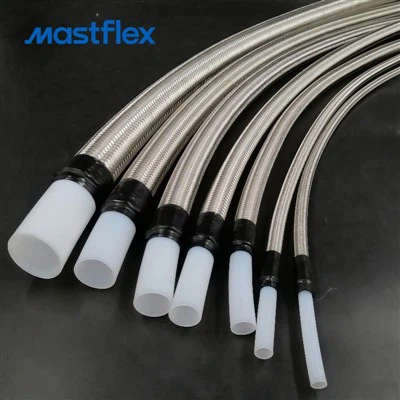
Hey there! As a supplier of braided silicone hoses, I often get asked if these hoses are resistant to saltwater. It's a valid question, especially for those who work in marine environments, aquariums, or any application where saltwater is involved. In this blog, I'll dive into the details of whether braided silicone hoses can stand up to the corrosive nature of saltwater.


Understanding Braided Silicone Hoses
First off, let's talk a bit about what braided silicone hoses are. These hoses are made of a silicone tube that's reinforced with a braided material. The braiding can be made from various materials like polyester or wire, which adds strength and durability to the hose. There are different types of braided silicone hoses, such as the Double Braided Silicone Hose, Polyester Reinforced Silicone Hose, and Wire Reinforced Silicone Tubing. Each type has its own unique properties and is suitable for different applications.
The Chemistry of Saltwater and Its Effects
Saltwater is a mixture of water and various salts, mainly sodium chloride. The presence of these salts makes saltwater a highly corrosive substance. When a material comes into contact with saltwater, the salts can react with the surface of the material, causing corrosion, degradation, and eventually failure.
The main mechanism of corrosion in saltwater is electrochemical corrosion. The salts in the water act as an electrolyte, which allows the flow of electrical current between different parts of the material. This current can cause the metal or other components of the material to oxidize, leading to rust or other forms of corrosion.
Silicone's Resistance to Saltwater
Silicone is a synthetic polymer that has excellent resistance to a wide range of chemicals, including saltwater. The unique molecular structure of silicone gives it several properties that make it suitable for use in saltwater environments.
- Chemical Inertness: Silicone is chemically inert, which means it doesn't react easily with other substances. This makes it resistant to the corrosive effects of saltwater.
- Hydrophobicity: Silicone is hydrophobic, which means it repels water. This property helps to prevent water from penetrating the material and causing corrosion.
- Flexibility and Durability: Silicone is a flexible and durable material that can withstand repeated bending and stretching without cracking or breaking. This makes it suitable for use in applications where the hose needs to be flexible, such as in marine engines or aquariums.
Braided Silicone Hoses in Saltwater Applications
Based on the properties of silicone, braided silicone hoses are generally resistant to saltwater. However, the actual resistance of a braided silicone hose to saltwater depends on several factors, such as the quality of the silicone, the type of braiding material, and the thickness of the hose.
- Quality of Silicone: High-quality silicone hoses are more resistant to saltwater than low-quality ones. Look for hoses that are made from medical-grade or food-grade silicone, as these are typically more resistant to chemicals and have better durability.
- Type of Braiding Material: The braiding material can also affect the resistance of the hose to saltwater. For example, polyester braiding is more resistant to corrosion than some other materials, while wire braiding can provide additional strength and durability.
- Thickness of the Hose: Thicker hoses are generally more resistant to saltwater than thinner ones. A thicker hose provides more protection against the corrosive effects of saltwater and can withstand higher pressures.
Real-World Applications
Braided silicone hoses are commonly used in a variety of saltwater applications, including:
- Marine Engines: Braided silicone hoses are used in marine engines to transfer coolant, fuel, and other fluids. The hoses need to be resistant to saltwater and other chemicals to ensure reliable operation.
- Aquariums: In aquariums, braided silicone hoses are used to transfer water, air, and other fluids. The hoses need to be non-toxic and resistant to saltwater to ensure the health of the fish and other aquatic animals.
- Desalination Plants: Braided silicone hoses are used in desalination plants to transfer seawater and freshwater. The hoses need to be resistant to the high salt content of seawater and the chemicals used in the desalination process.
Maintenance and Care
To ensure the long-term performance of braided silicone hoses in saltwater applications, it's important to follow proper maintenance and care procedures. Here are some tips:
- Regular Cleaning: Clean the hoses regularly with a mild detergent and water to remove any salt or other contaminants.
- Inspection: Inspect the hoses regularly for signs of damage, such as cracks, leaks, or wear. Replace any damaged hoses immediately.
- Proper Storage: Store the hoses in a cool, dry place away from direct sunlight and heat. Avoid storing the hoses in contact with sharp objects or abrasive materials.
Conclusion
In conclusion, braided silicone hoses are generally resistant to saltwater, thanks to the chemical inertness, hydrophobicity, and flexibility of silicone. However, the actual resistance of a braided silicone hose to saltwater depends on several factors, such as the quality of the silicone, the type of braiding material, and the thickness of the hose. By choosing high-quality hoses and following proper maintenance and care procedures, you can ensure the long-term performance of your braided silicone hoses in saltwater applications.
If you're in the market for braided silicone hoses for your saltwater application, don't hesitate to reach out. We're here to help you find the right hose for your needs and provide you with the best possible service. Let's start a conversation and see how we can work together!
References
- "Silicone Rubber: Properties and Applications" by John W. Summers
- "Corrosion in Saltwater Environments" by Robert G. Kelly
- "Marine Hose Selection Guide" by Hose Master