Is a PTFE braided hose suitable for use with natural gas? This is a question that I, as a PTFE Braided Hose supplier, get asked quite often. In this blog, I'll dig deep into this topic to give you a clear answer.
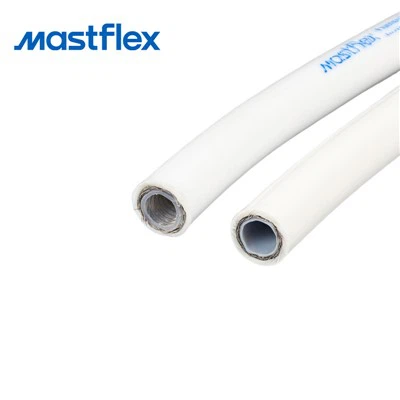
First off, let's understand what PTFE braided hoses are. PTFE, or polytetrafluoroethylene, is a synthetic fluoropolymer known for its excellent chemical resistance, low friction, and high temperature tolerance. A PTFE braided hose consists of a PTFE inner tube that's reinforced with a braided outer layer, usually made of stainless steel or other strong materials. This design gives the hose added strength and flexibility.
Now, when it comes to using PTFE braided hoses with natural gas, there are several factors to consider. Natural gas is a mixture of hydrocarbons, mainly methane, and it's highly flammable. So, any hose used with natural gas needs to be able to handle the gas safely without leaking or causing any hazards.
One of the key advantages of PTFE braided hoses is their chemical resistance. PTFE is inert to most chemicals, including natural gas. This means that the inner PTFE tube won't react with the natural gas, preventing any chemical degradation or contamination. The braided outer layer also provides an extra layer of protection, reducing the risk of the hose bursting or leaking.
Another important factor is the pressure rating of the hose. Natural gas is typically transported at high pressures, so the hose needs to be able to withstand these pressures without failing. PTFE braided hoses are available in a range of pressure ratings, so you can choose the one that's suitable for your specific application.
Temperature is also a crucial consideration. Natural gas can be transported at different temperatures, and the hose needs to be able to handle these temperature variations. PTFE has a wide temperature range, from -200°C to 260°C (-328°F to 500°F), which makes it suitable for use in a variety of environments.
However, it's not all rosy. There are some potential drawbacks to using PTFE braided hoses with natural gas. One issue is the cost. PTFE braided hoses are generally more expensive than other types of hoses, which can be a concern for some users. Another potential problem is the installation. PTFE braided hoses need to be installed correctly to ensure a proper seal and prevent leaks. If the installation is not done properly, it can lead to safety issues.


So, is a PTFE braided hose suitable for use with natural gas? The answer is yes, but with some caveats. If you need a hose that can handle the chemical and pressure requirements of natural gas, and you're willing to pay the extra cost, then a PTFE braided hose is a good option. However, you need to make sure that the hose is installed correctly and that it meets all the relevant safety standards.
If you're in the market for a PTFE braided hose for use with natural gas, I encourage you to check out our range of products. We offer a variety of PTFE braided hoses, including Silicone Covered PTFE Hose, Braided PTFE Hose Smooth Bore, and PTFE Braided Hose. Our hoses are made from high-quality materials and are designed to meet the highest safety standards.
If you have any questions or need more information, feel free to reach out to us. We're here to help you find the right hose for your needs and ensure that you have a safe and reliable natural gas system.
References:
- "Handbook of PTFE Technology" by John Murphy
- "Natural Gas Engineering Handbook" by John M. Campbell