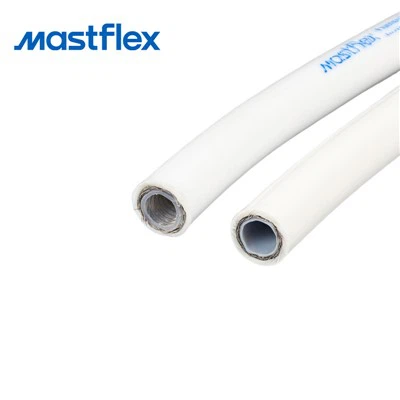
Yo, folks! As a supplier of high purity PFA tubing, I often get asked about how its cost stacks up against other tubing materials. So, I thought I'd break it down for you and give you the lowdown on what makes PFA tubing unique in terms of pricing.
Let's start by talking a bit about PFA tubing. PFA, or perfluoroalkoxy, is a high-performance fluoropolymer. It's known for its excellent chemical resistance, high purity, and great flexibility, which makes it a top choice in a bunch of industries, like semiconductor manufacturing, chemical processing, and pharmaceutical production.
Now, when it comes to the cost, high purity PFA tubing is generally more expensive than some other common tubing materials. Why is that? Well, it all boils down to its production process and properties.
The production of high purity PFA tubing is no walk in the park. It requires a high - level of precision and strict quality control. The raw materials used in PFA are not cheap, and the manufacturing process involves several complex steps to ensure the tubing meets the high - purity standards. For example, in semiconductor manufacturing, even the tiniest impurity in the tubing can cause defects in the chips, so the purity requirements are super strict. This means more time, effort, and resources are put into making high - quality PFA tubing, which drives up the cost.
Let's compare it to some other tubing materials. First up, PVC (polyvinyl chloride) tubing. PVC is one of the most widely used tubing materials out there. It's cheap, easy to produce, and has a decent range of applications, like in plumbing and some general industrial applications. The cost of PVC tubing can be as low as a few dollars per foot, depending on the size and quality.
On the other hand, high purity PFA tubing can cost anywhere from tens to hundreds of dollars per foot. The price difference is huge, but there's a reason for it. PVC doesn't have the same level of chemical resistance or purity as PFA. If you're dealing with highly corrosive chemicals or need a tubing material that won't leach any contaminants, PVC just won't cut it.
Another common tubing material is silicone tubing. Silicone is flexible, heat - resistant, and relatively inexpensive. It's often used in food and beverage applications, as well as in medical devices. But again, when compared to PFA, it falls short in terms of chemical resistance. Silicone can react with certain chemicals, which can lead to degradation of the tubing and contamination of the fluid being transported.
So, while silicone tubing might be a good option for some low - risk applications, if you're in an industry where chemical compatibility and high purity are non - negotiable, PFA tubing is the way to go.


Now, there are also other high - performance tubing materials out there, like PTFE (polytetrafluoroethylene). PTFE has similar chemical resistance to PFA, but PFA has some advantages. PFA is more flexible than PTFE, which makes it easier to install and use in applications where bending and shaping of the tubing are required. In terms of cost, PTFE and PFA are in a similar ballpark, but PFA might be slightly more expensive due to its better flexibility and processability.
When you're considering the cost of high purity PFA tubing, you also have to think about the long - term savings. Sure, it might cost more upfront, but it can save you a lot of money in the long run. For example, because of its high chemical resistance, PFA tubing has a longer lifespan compared to other materials. You won't have to replace it as often, which means less downtime and lower replacement costs.
Also, in industries where product quality is crucial, the use of high purity PFA tubing can prevent costly product failures and recalls. In semiconductor manufacturing, a single impurity in the tubing can lead to a batch of defective chips, which can cost a fortune. By investing in high purity PFA tubing, you're essentially investing in the quality and reliability of your production process.
If you're in the market for high purity PFA tubing, you might also be interested in some related products. Check out our PFA Hose for applications that require more flexibility and durability. We also offer PFA Tube Fittings to ensure a secure and leak - free connection. And for applications where you need a tubing that can bend easily without kinking, our PFA Corrugated Tubing is a great option.
In conclusion, while high purity PFA tubing might be more expensive than some other tubing materials, its unique properties make it a valuable investment. If you're in an industry where chemical resistance, high purity, and long - term reliability are important, it's definitely worth considering.
If you're interested in learning more about our high purity PFA tubing or want to discuss your specific requirements, don't hesitate to reach out. We're here to help you find the best tubing solution for your needs.
References:
- "Fluoropolymer Tubing: Properties and Applications", Industrial Polymer Handbook
- "Chemical Compatibility of Tubing Materials", Chemical Engineering Journal