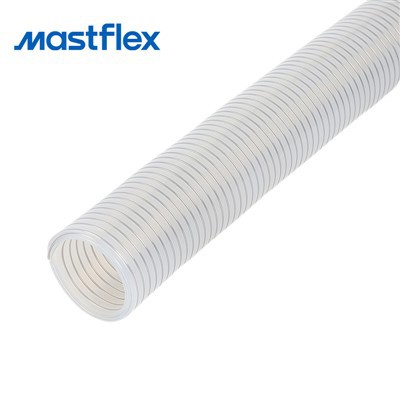
Do sanitary hoses have a consistent wall thickness throughout? This is a question that often comes up in the industry, and as a supplier of sanitary hoses, I'm here to provide some insights.
The Importance of Wall Thickness Consistency
Wall thickness consistency in sanitary hoses is crucial for several reasons. First and foremost, it affects the overall performance and durability of the hose. A hose with inconsistent wall thickness may have weak spots that are more prone to damage, such as leaks or bursts. This can lead to product loss, contamination, and costly downtime in industrial processes.
In the food and beverage industry, for example, sanitary hoses are used to transfer liquids such as milk, juices, and wines. Any compromise in the hose's integrity can result in the contamination of the product, which is a serious concern for both producers and consumers. Consistent wall thickness ensures that the hose can withstand the pressure and stress of the transfer process without any issues.
Manufacturing Processes and Wall Thickness
The manufacturing process plays a significant role in determining the wall thickness consistency of sanitary hoses. At our company, we use advanced extrusion techniques to produce high-quality hoses with uniform wall thickness. During the extrusion process, the raw material is melted and forced through a die to form the hose shape. The die is designed to ensure that the material is evenly distributed, resulting in a consistent wall thickness throughout the hose.
However, achieving perfect wall thickness consistency is not always easy. There are several factors that can affect the process, such as the quality of the raw material, the temperature and pressure during extrusion, and the speed of the production line. To minimize these variables, we have strict quality control measures in place at every stage of the manufacturing process. Our team of experts conducts regular inspections and tests to ensure that the hoses meet our high standards.
Types of Sanitary Hoses and Their Wall Thickness
There are different types of sanitary hoses available in the market, each with its own specific wall thickness requirements. For instance, Silicone Milk Hose is commonly used in the dairy industry. These hoses typically have a relatively thin wall thickness to allow for flexibility and easy handling. However, they still need to be strong enough to withstand the pressure and temperature of the milk transfer process.
On the other hand, Sanitary Braided Hose is designed for applications that require higher pressure and durability. The braided reinforcement provides additional strength and support, allowing the hose to handle more demanding conditions. These hoses usually have a thicker wall thickness compared to non-braided hoses.
Sanitary Hose Assemblies are another type of sanitary hose that is widely used in various industries. These assemblies consist of a hose, fittings, and other components that are pre-assembled for easy installation. The wall thickness of the hose in these assemblies is carefully selected to ensure compatibility with the fittings and the overall performance of the system.


Measuring Wall Thickness
To ensure that our sanitary hoses have a consistent wall thickness, we use advanced measuring techniques. One of the most common methods is the use of calipers, which can accurately measure the thickness of the hose wall at different points. We also use non-destructive testing methods, such as ultrasonic testing, to detect any internal defects or variations in the wall thickness.
In addition to these in-house testing methods, we also rely on third-party testing laboratories to verify the quality and performance of our hoses. These independent tests provide an objective assessment of the wall thickness consistency and other important properties of the hoses.
Challenges and Solutions
Despite our best efforts, achieving perfect wall thickness consistency can still be a challenge. One of the main challenges is the variability in the raw material. Different batches of raw material may have slightly different properties, which can affect the wall thickness of the hoses. To address this issue, we work closely with our suppliers to ensure that the raw material meets our strict quality standards.
Another challenge is the wear and tear that the hoses may experience during use. Over time, the wall thickness of the hose may decrease due to friction, abrasion, or chemical exposure. To mitigate this problem, we offer hoses with special coatings or linings that can provide additional protection and extend the lifespan of the hoses.
Conclusion
In conclusion, wall thickness consistency is an important factor in the performance and durability of sanitary hoses. As a supplier of sanitary hoses, we are committed to producing high-quality hoses with uniform wall thickness. Through advanced manufacturing processes, strict quality control measures, and the use of advanced testing techniques, we ensure that our hoses meet the highest standards of quality and reliability.
If you are in the market for sanitary hoses and are looking for a reliable supplier, we would be happy to discuss your specific requirements. Our team of experts can provide you with detailed information about our products and help you choose the right hose for your application. Contact us today to start the conversation.
References
- ASTM International. (20XX). Standard Specification for Sanitary Hoses.
- Food and Drug Administration. (20XX). Regulations for Food Contact Materials.
- Industry Reports on Sanitary Hoses. (20XX).