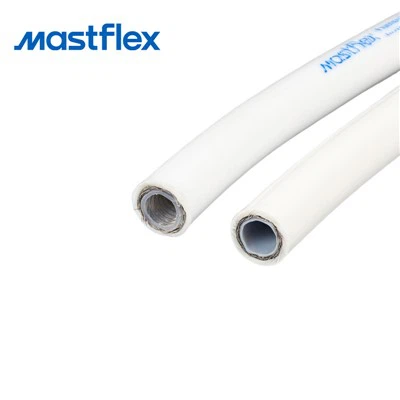
Hey there! As a PTFE hose supplier, I often get asked if PTFE hoses can be used in automotive applications. Well, the short answer is yes, and in this blog, I'll dive into why that is, the types of PTFE hoses suitable for cars, and how they stack up against other hose materials.
Why PTFE Hoses for Automotive Use?
First off, let's talk about what makes PTFE (Polytetrafluoroethylene) so great for automotive applications. PTFE is known for its incredible chemical resistance. In a car, there are all sorts of fluids like gasoline, oil, coolant, and brake fluid. These fluids can be pretty harsh on regular hoses, causing them to degrade over time. But PTFE hoses can handle these chemicals like a champ. They won't break down or corrode, which means they'll last a lot longer in your vehicle.
Another big advantage is PTFE's low friction coefficient. This is super important for fuel lines. When fuel flows through a hose with a high friction surface, it has to work harder to move. That can lead to reduced fuel efficiency. With PTFE hoses, the fuel can flow more smoothly, which can actually improve your car's gas mileage.
PTFE also has a wide temperature range. It can handle extreme heat and cold without losing its properties. In an engine compartment, temperatures can get really high, and in cold climates, hoses need to stay flexible. PTFE hoses can withstand these temperature variations, ensuring reliable performance in all conditions.
Types of PTFE Hoses for Automotive Applications
Silicone Covered PTFE Hose
One popular type of PTFE hose for automotive use is the Silicone Covered PTFE Hose. The silicone cover provides an extra layer of protection. It's resistant to abrasion, which is important in a car where hoses can rub against other components. The silicone also helps to insulate the PTFE inner tube, protecting it from heat and damage. This type of hose is often used in high-performance vehicles where reliability is key.
PTFE Corrugated Hose
The PTFE Corrugated Hose is another great option. The corrugated design makes the hose more flexible. This is useful in automotive applications where hoses need to be routed around tight spaces. It can bend and twist without kinking, which is crucial for maintaining a consistent flow of fluids. The corrugations also add some strength to the hose, making it more durable.
PTFE Lined Braided Hose
The PTFE Lined Braided Hose combines the chemical resistance of PTFE with the strength of a braided outer layer. The braided layer can be made of materials like stainless steel or synthetic fibers. This type of hose is very strong and can handle high pressures. It's often used in hydraulic systems in cars, such as the brake lines.
Comparing PTFE Hoses to Other Materials
Now, let's compare PTFE hoses to some other common hose materials used in automotive applications.
Rubber Hoses
Rubber hoses are cheap and easy to find, but they have some drawbacks. They're not as resistant to chemicals as PTFE hoses. Over time, rubber can swell and break down when exposed to gasoline and other fluids. They also have a higher friction coefficient, which can affect fuel flow. And rubber hoses don't handle extreme temperatures as well as PTFE hoses.
Nylon Hoses
Nylon hoses are lightweight and have good strength. However, they're not as chemically resistant as PTFE. They can also be more prone to cracking and leaking under high pressure or in extreme temperatures. PTFE hoses, on the other hand, offer better overall performance and durability.
Installation and Maintenance
Installing PTFE hoses in your car is pretty straightforward, but there are a few things to keep in mind. Make sure you measure the length and diameter of the hose correctly. You'll also need to use the right fittings. It's important to tighten the fittings properly to prevent leaks.
Maintenance is also relatively easy. PTFE hoses don't require much upkeep. Just check them regularly for any signs of damage or wear. If you notice any cracks or leaks, it's best to replace the hose right away.
Cost Considerations
PTFE hoses are generally more expensive than rubber or nylon hoses. But when you consider their long lifespan and better performance, they're actually a good investment. You won't have to replace them as often, which can save you money in the long run. And the improved fuel efficiency and reliability can also lead to cost savings.
Conclusion
So, can PTFE hoses be used in automotive applications? Absolutely! They offer superior chemical resistance, low friction, and a wide temperature range. With different types like silicone covered, corrugated, and lined braided hoses, there's a PTFE hose to suit every automotive need.


If you're in the market for PTFE hoses for your automotive project, don't hesitate to reach out. We're here to help you find the right hose for your specific requirements. Whether you're a car enthusiast looking to upgrade your vehicle or an automotive manufacturer in need of reliable hoses, we've got you covered.
References
- "Automotive Fluid Handling Systems" by XYZ Publishing
- "Materials for Automotive Hoses" - Journal of Automotive Engineering