Can PTFE Hose Assembly be Used in Oil and Gas Industries?
In the dynamic and demanding landscape of the oil and gas industries, the selection of appropriate hoses is crucial for ensuring operational efficiency, safety, and reliability. One material that has gained significant attention in recent years is Polytetrafluoroethylene (PTFE), and its hose assemblies are increasingly being considered for use in these sectors. As a leading PTFE Hose Assembly supplier, I am well - versed in the capabilities and applications of PTFE hoses in the oil and gas industries, and I will explore this topic in depth.
Properties of PTFE that Make it Suitable for Oil and Gas Applications
PTFE is a synthetic fluoropolymer of tetrafluoroethylene that possesses a unique set of properties, making it an ideal candidate for use in oil and gas environments.
Chemical Resistance: One of the most significant advantages of PTFE is its exceptional chemical resistance. In the oil and gas industries, hoses are often exposed to a wide range of chemicals, including crude oil, refined petroleum products, natural gas, and various additives. PTFE can withstand these harsh chemicals without degradation, ensuring the integrity of the hose assembly over time. For example, it can resist the corrosive effects of acids, bases, and solvents commonly found in oil and gas processing.
Temperature Resistance: The oil and gas industries operate in extreme temperature conditions, from the cold temperatures of offshore drilling to the high - temperature environments of refineries. PTFE has a wide temperature range, typically from - 200°C to + 260°C. This allows PTFE hose assemblies to maintain their flexibility and performance under both extremely cold and hot conditions, reducing the risk of hose failure due to temperature - related stress.
Low Friction Coefficient: PTFE has a very low friction coefficient, which means that fluids can flow through the hose with minimal resistance. In the oil and gas industries, where the efficient transfer of fluids is essential, this property can lead to energy savings and improved flow rates. It also reduces the wear and tear on the hose interior, extending its service life.
Non - Stick Properties: The non - stick nature of PTFE prevents the build - up of deposits inside the hose. In oil and gas applications, where the transported fluids may contain solids or viscous substances, this property is highly beneficial. It helps to maintain a clean and unobstructed flow path, reducing the need for frequent cleaning and maintenance.
Types of PTFE Hose Assemblies for Oil and Gas Industries
There are several types of PTFE hose assemblies available, each with its own characteristics and applications in the oil and gas sectors.
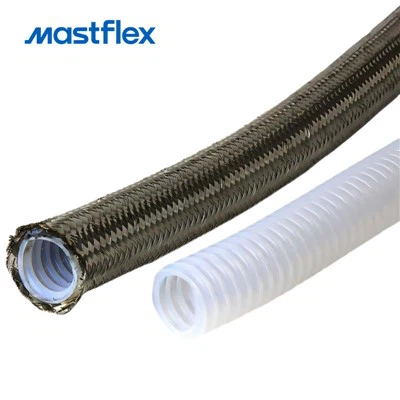
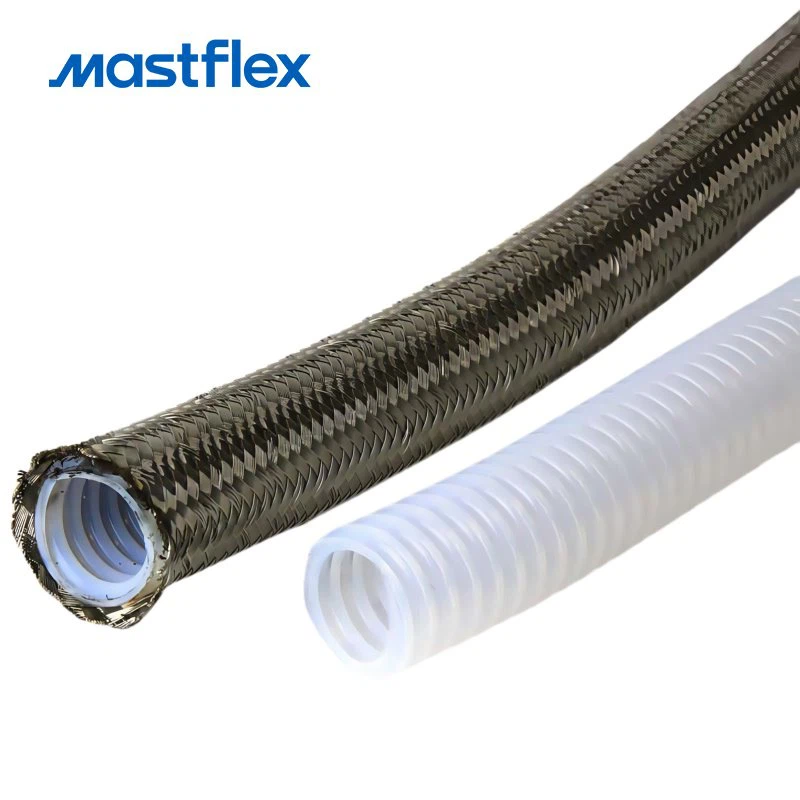
Braided PTFE Hose Convoluted: The convoluted design of this hose provides flexibility, making it suitable for applications where the hose needs to be bent or routed around obstacles. The braided outer layer adds strength and pressure resistance, making it suitable for high - pressure oil and gas transfer. It is often used in offshore drilling operations, where the hoses need to be flexible enough to adapt to the movement of the drilling rigs.
Braided PTFE Hose Smooth Bore: This type of hose has a smooth interior surface, which allows for a more laminar flow of fluids. It is ideal for applications where a high - flow rate and low pressure drop are required. In refineries, for example, smooth - bore PTFE hoses are used to transfer refined petroleum products with minimal resistance.
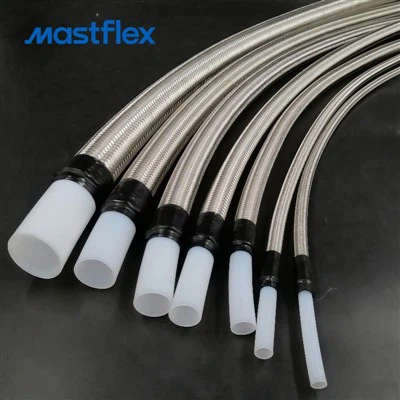
PTFE Braided Hose: PTFE braided hoses are known for their high strength and durability. The braided construction provides additional reinforcement, making the hose suitable for high - pressure applications in the oil and gas industries. They can be used in a variety of settings, from onshore pipelines to offshore platforms.
Applications of PTFE Hose Assemblies in Oil and Gas Industries
Drilling Operations: In offshore and onshore drilling, PTFE hose assemblies are used for various purposes. They are used to transfer drilling fluids, such as mud and cement, from the storage tanks to the drill bit. The chemical resistance and flexibility of PTFE hoses make them suitable for this application, as they can withstand the harsh chemicals in the drilling fluids and adapt to the movement of the drilling equipment.
Refining Processes: Refineries require hoses that can handle high - temperature and high - pressure conditions. PTFE hose assemblies are used to transfer refined petroleum products, such as gasoline, diesel, and jet fuel, between different processing units. Their low friction coefficient and chemical resistance ensure efficient and safe transfer of these products.
Gas Processing: In natural gas processing plants, PTFE hoses are used to transfer natural gas and its by - products. The hoses need to be able to withstand the high - pressure and low - temperature conditions often encountered in gas processing. PTFE's temperature resistance and chemical compatibility make it an ideal choice for these applications.
Challenges and Considerations
While PTFE hose assemblies offer many advantages in the oil and gas industries, there are also some challenges and considerations.
Cost: PTFE is a relatively expensive material compared to other hose materials. The cost of PTFE hose assemblies can be a significant factor, especially for large - scale projects. However, the long - term benefits, such as reduced maintenance and longer service life, can offset the initial investment.
Installation and Handling: PTFE hoses require proper installation and handling to ensure their performance. Improper installation can lead to leaks or premature failure. It is important to follow the manufacturer's guidelines for installation and use.

Compatibility with Other Materials: When using PTFE hose assemblies in oil and gas applications, it is important to ensure compatibility with other materials in the system, such as connectors and gaskets. Incompatible materials can lead to chemical reactions or leaks.
Conclusion
In conclusion, PTFE hose assemblies can be effectively used in the oil and gas industries. Their unique properties, such as chemical resistance, temperature resistance, low friction coefficient, and non - stick properties, make them suitable for a wide range of applications in drilling, refining, and gas processing. While there are some challenges, such as cost and installation requirements, the long - term benefits of using PTFE hoses often outweigh these drawbacks.
If you are in the oil and gas industry and are looking for high - quality PTFE hose assemblies, we are here to help. Our team of experts can provide you with the right solutions for your specific needs. Contact us to discuss your requirements and start a procurement negotiation.
References
- Brown, J. (2018). "Materials for Oil and Gas Applications". Elsevier.
- Smith, A. (2019). "Hose Technology in the Oil and Gas Sector". Journal of Petroleum Engineering.