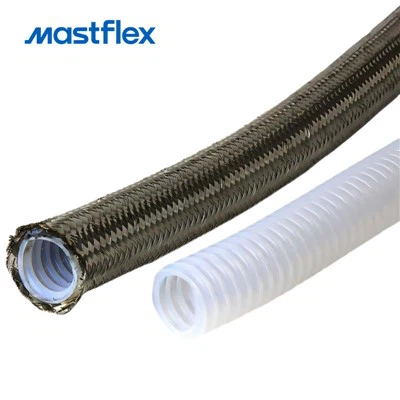
PTFE (Polytetrafluoroethylene) hoses have gained significant popularity in various industries due to their exceptional chemical resistance, high-temperature tolerance, and low friction properties. One common question that often arises is whether PTFE hoses are resistant to salt spray. As a PTFE hose supplier, I will delve into this topic to provide you with a comprehensive understanding of PTFE hoses' performance in salt spray environments.
Understanding PTFE and Its Properties
PTFE is a synthetic fluoropolymer of tetrafluoroethylene. It is well - known for its outstanding chemical inertness, which means it does not react with most chemicals. This inertness is a result of the strong carbon - fluorine bonds in its molecular structure. PTFE has a wide temperature range, typically from - 200°C to 260°C, and it offers excellent non - stick properties, low surface tension, and high dielectric strength.
Salt Spray and Its Effects
Salt spray is a common environmental factor, especially in coastal areas and marine applications. When metal components are exposed to salt spray, they are prone to corrosion. The salt in the spray can accelerate the oxidation process, leading to the formation of rust and other corrosion products. These corrosion products can weaken the structure of the metal, reduce its lifespan, and potentially cause equipment failure.
PTFE Hoses and Salt Spray Resistance
PTFE hoses are highly resistant to salt spray. The chemical inertness of PTFE means that it does not react with the salt in the spray. Unlike metals, PTFE does not corrode when exposed to salt water or salt - laden air. This makes PTFE hoses an ideal choice for applications in coastal and marine environments, such as in ships, offshore platforms, and coastal industrial facilities.
Laboratory Testing
Numerous laboratory tests have been conducted to evaluate the performance of PTFE hoses in salt spray environments. These tests typically involve exposing PTFE hoses to a salt - fog chamber, where they are sprayed with a salt solution for a specified period. After the test, the hoses are inspected for any signs of degradation, such as changes in appearance, mechanical properties, or chemical composition.
In most cases, PTFE hoses show no significant changes after salt spray testing. Their physical and chemical properties remain intact, indicating their high resistance to salt spray. This makes them a reliable option for long - term use in salt - rich environments.


Applications of PTFE Hoses in Salt - Rich Environments
Marine Industry
In the marine industry, PTFE hoses are widely used for various applications. They can be used for fuel transfer, hydraulic systems, and water intake and discharge. The salt - resistant property of PTFE hoses ensures that they can withstand the harsh marine environment without corroding or degrading. For example, Braided PTFE Hose Convoluted is often used in marine fuel transfer systems due to its flexibility and salt - resistance.
Coastal Industrial Facilities
Coastal industrial facilities, such as chemical plants and power stations, also benefit from the use of PTFE hoses. These facilities are often exposed to salt - laden air, and PTFE hoses can be used for transporting chemicals, water, and other fluids. The Braided PTFE Hose Smooth Bore is a popular choice for these applications because of its smooth inner surface, which reduces fluid resistance and minimizes the risk of clogging.
Offshore Platforms
Offshore platforms are exposed to extremely harsh salt - spray conditions. PTFE hoses are used for a variety of purposes, including hydraulic control systems, chemical injection, and gas transfer. The PTFE Hose Assembly provides a reliable and durable solution for these applications, ensuring the safe and efficient operation of offshore platforms.
Advantages of Using PTFE Hoses in Salt - Spray Environments
Longevity
One of the main advantages of using PTFE hoses in salt - spray environments is their long lifespan. Since they do not corrode or degrade when exposed to salt, they can last for many years without the need for frequent replacement. This reduces maintenance costs and downtime for industrial operations.
Chemical Compatibility
PTFE hoses are compatible with a wide range of chemicals, including those commonly found in salt - rich environments. This makes them suitable for transporting various fluids, such as acids, bases, and solvents, without the risk of chemical reactions or degradation.
Flexibility
PTFE hoses are highly flexible, which allows for easy installation and routing in complex systems. This flexibility also helps to reduce stress on the hoses, extending their lifespan and improving their performance.
Conclusion
In conclusion, PTFE hoses are highly resistant to salt spray. Their chemical inertness, combined with their excellent physical properties, makes them an ideal choice for applications in salt - rich environments. Whether it is in the marine industry, coastal industrial facilities, or offshore platforms, PTFE hoses can provide reliable and long - lasting performance.
If you are looking for high - quality PTFE hoses for your salt - spray applications, we are here to help. Our company offers a wide range of PTFE hoses, including Braided PTFE Hose Convoluted, Braided PTFE Hose Smooth Bore, and PTFE Hose Assembly. We can provide customized solutions to meet your specific requirements. Contact us today to discuss your procurement needs and explore how our PTFE hoses can benefit your operations.
References
- ASTM B117 - Standard Practice for Operating Salt Spray (Fog) Apparatus
- "Handbook of Fluoropolymer Science and Technology" by John Scheirs and Thomas M. Kemmer