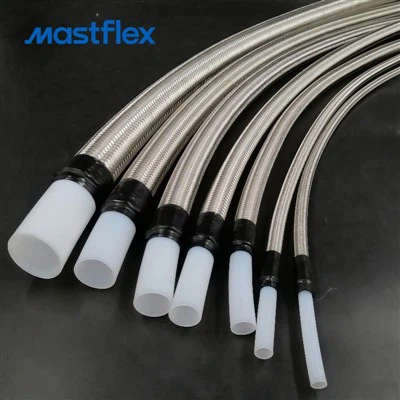
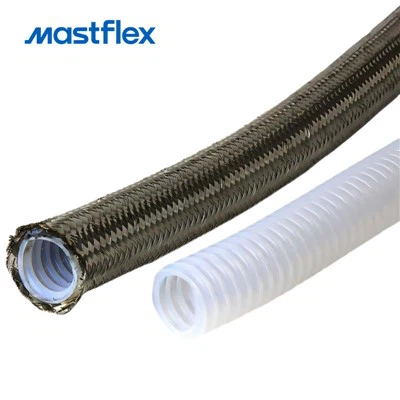
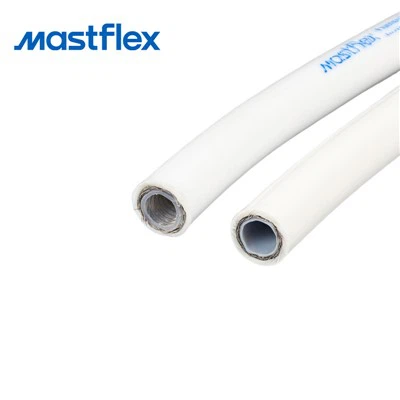
Fluoropolymer tubing is a High-performance plastic tubing made from fluorinated polymer materials (such as PTFE, PFA, FEP, etc.), featuring corrosion resistance, high and low temperature resistance (-200°C to +260°C), high purity, and low adsorption. It is widely used in industries such as semiconductors, pharmaceuticals, chemicals, and photovoltaics.
Product Advantages
Exceptional Chemical Stability
Resistant to strong acids, strong alkalis, organic solvents, and strong oxidizing agents, suitable for highly corrosive environments in the chemical and semiconductor industries.
01
High Purity and Low Adsorption
Smooth surface prevents medium adhesion, reducing contamination risks and meeting cleanliness requirements in the semiconductor and pharmaceutical industries.
02
Excellent electrical insulation
High dielectric strength, suitable for wire and cable insulation and electronic device components.
03
Environmentally friendly and safe
Non-toxic, non-polluting, and partially recyclable, minimizing the risk of chemical leaks.
04
Flexible processing
Can be fabricated into straight tubes, bent tubes, tees, etc., to meet various engineering requirements.
05
Main types and applications
|
Type |
Advantages |
Typical applications |
|
PTFE tubing |
High chemical stability, low friction coefficient |
Transportation of corrosive chemical media, low-friction mechanical components |
|
PFA tubing |
Can be heat welded, excellent comprehensive performance |
Transportation of high-purity fluids in the semiconductor industry, pharmaceutical industry |
|
FEP tubing |
Good flexibility, high transparency |
Laboratory equipment, medical device fluid lines |
Installation Notes
Fluoroplastic tubing Connection Methods
Common connection methods include heat fusion welding (e.g., PFA pipes), compression fittings (suitable for thin-walled pipes), and flange connections.
Heat fusion welding provides strong sealing and is suitable for high-purity, high-pressure systems;
Compression fittings are easy to install and suitable for laboratories or small pipelines;
Flange connections are easy to disassemble and maintain, and are commonly used in large equipment or scenarios requiring frequent maintenance.
Preventing Leaks During Installation
Ensure the pipe ends are smooth and free of burrs before installation;
Heat fusion welding requires strict control of temperature (380°C–400°C) and pressure;
Socket welding connections must be tightened to the standard torque (e.g., φ10mm pipe nut torque approximately 8–10 N·m);
Flange connections must use compatible sealing gaskets (e.g., PTFE or PFA material).
About us
We are a high-tech enterprise specializing in the research, development, production, and sales of high-performance fluoropolymer tubing, with over 15 years of industry experience. Our factory is located in Dongguan, China, covering an area of 5,000 square meters, with a current workforce of 160 employees, including a research and development team of 30 engineers, possessing strong capabilities in independent design and technological innovation.

Our Advantages
Professional Technical Team
We have an experienced R&D team that masters the core production technology of fluoroplastic tubing.
Advanced Production Processes
We utilize internationally leading extrusion sintering processes to ensure stable and reliable product performance.
Strict Quality Control
We have established a comprehensive quality management system, and our products have obtained multiple international certifications.
Customized Services
We can provide personalized product solutions tailored to customer needs.
FAQ
Hot Tags: fluoropolymer tubing, China fluoropolymer tubing manufacturers, suppliers, factory, Braided PTFE Hose Convoluted, Braided PTFE Hose Smooth Bore, Fluoropolymer Tubing, PTFE Braided Hose, PTFE Corrugated Hose, ptfe stainless braided hose