

FirstWhat Does CuringActually Mean
Raw silicone starts as a soft, almost gel-like compound. To make it useful - heat-resistant, flexible, durable - it needs to go through a process called vulcanization, or curing. Think of it like baking: the raw dough is pliable, but it needs heat (and the right chemistry) to set into the final structure.
There are two main ways to cure silicone rubber: using platinum as a catalyst (addition cure), or using peroxide (condensation cure). Same raw material, very different chemistry - and that chemistry leaves very different fingerprints in the finished product.
How Platinum Curing Works - And Why It's the Cleaner Option
In platinum-catalyzed curing, a platinum compound triggers a chemical reaction that links the silicone polymer chains together. The key thing is what's left behind after the reaction: almost nothing. The platinum acts as a catalyst - it drives the reaction without being consumed - so there are no meaningful byproducts trapped in the material afterward.
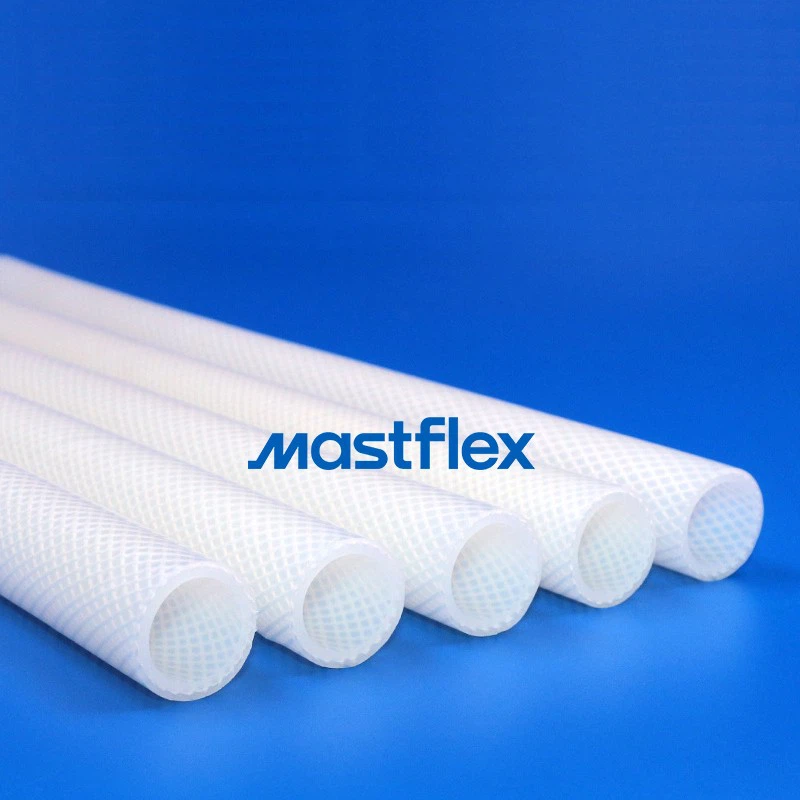
This is why platinum cured silicone tubing is the preferred choice for applications where purity really matters. Because there are no volatile residues, the tubing doesn't impart odor, taste, or chemical contamination to whatever flows through it.
What the certifications say
Platinum-cured silicone is typically the basis for compliance with:
FDA 21 CFR 177.2600 - the US standard for rubber articles in food contact
USP Class VI - a biocompatibility standard widely used in pharmaceutical and medical applications
EU 10/2011 - European food contact material regulation
3-A Sanitary Standards - used in dairy and beverage processing equipment
EHEDG guidelines - hygienic equipment design in food manufacturing
According to data from multiple independent laboratory studies, platinum-cured silicone consistently shows extractable levels well below regulatory thresholds - with many high-quality formulations showing near-zero migration in simulated food contact testing.
Sunhingstones Case Study
A customer in dairy processing came to us after failing an internal hygiene audit. Their previous food grade silicone tubing supplier had been shipping peroxide-cured material labeled generically as "food safe silicone." After switching to our platinum-cured product with full FDA documentation, they passed their next audit on the first review - and the faint off-taste that had been bothering their QC team disappeared entirely.
How Peroxide Curing Works - And Where It Falls Short
Peroxide curing uses organic peroxides to initiate the cross-linking reaction. It works, and it produces a perfectly functional silicone product - but the peroxide itself gets partially consumed in the reaction, leaving behind residual byproducts (mainly low-molecular-weight volatile compounds) in the finished material.
These residuals are the problem. They can:
Leach into fluids that pass through the tubing
Produce a slight odor, particularly when new or when heated
Cause the tubing to yellow or discolor over time
Create compliance issues for FDA-regulated applications
Manufacturers can reduce (but not fully eliminate) these residuals through a secondary post-curing step - essentially baking the tubing at high temperature for an extended period. This adds time, energy, and cost to production, and the results are inconsistent across suppliers.
A 2019 study published in the journal Food Additives & Contaminants found that uncured or under-post-cured peroxide silicone samples showed measurable migration of volatile organic compounds into food simulants - in some cases above guidance thresholds set by the European Food Safety Authority (EFSA). Platinum-cured samples from the same study showed no significant migration.
Side-by-Side: Platinum Cured vs. Peroxide Cured
|
Feature |
Platinum Cured |
Peroxide Cured |
|
Purity / residuals |
Very high - minimal residuals |
Lower - peroxide byproducts present |
|
FDA food contact compliance |
Yes |
Conditional (depends on post-cure) |
|
Odor / taste transfer |
None |
Possible, especially when new or heated |
|
Appearance over time |
Stays clear / translucent |
May yellow |
|
Biocompatibility (USP Class VI) |
Standard |
Requires extra testing |
|
Cost |
Slightly higher |
Lower |
|
Best applications |
Food, pharma, medical, peristaltic pumps |
Industrial, mechanical, non-food |
Which Industries Actually Need Platinum Silicone Tubing
The short answer: any industry where what flows through the tubing ends up in - or near - a human body.
Food and beverage processing
Breweries, dairy plants, juice producers, and bottled water facilities all rely on FDA silicone tubing for transfer lines, filling systems, and CIP (clean-in-place) loops. Platinum-cured tubing is the standard here because it won't affect product flavor and won't introduce contaminants during high-temperature cleaning cycles.
Pharmaceutical and biotech manufacturing
Sterile fluid transfer in drug manufacturing is one of the most demanding applications for silicone tubing. USP Class VI compliance is often a minimum requirement, and many facilities have moved to fully extractables-and-leachables (E&L) tested tubing as part of their process validation.
Peristaltic pump systems
This is a big one. Silicone pump tubing used in peristaltic pumps takes constant mechanical stress - it's compressed and released thousands of times per hour. Platinum-cured silicone holds up better under this kind of fatigue, maintaining consistent flow rates and dimensional integrity for longer. For laboratory, medical device, and dosing applications, it's really the only sensible choice.
Sunhingstones Case Study
A nutraceutical manufacturer approached us needing high purity silicone tubing for pharmaceutical use in their liquid supplement filling line. Their previous tubing - peroxide cured, sourced from a general industrial supplier - was failing dimensional tolerances after 3–4 weeks of continuous pump use. We supplied platinum-cured peristaltic pump tubing with a consistent Shore A hardness and wall tolerance of ±0.1mm. Their mean time between tube replacements went from under a month to over six months.
Medical devices and laboratory equipment
From IV drip lines to diagnostic instruments, medical grade platinum silicone tubing is the go-to material wherever biocompatibility is non-negotiable. ISO 10993 biocompatibility testing is routinely run on platinum-cured products - peroxide-cured tubing rarely meets the same benchmarks without extensive post-processi


Is Platinum Always the Better Choice
Not always. For purely industrial or mechanical applications - outdoor irrigation, pneumatic systems, industrial coolant lines, non-contact mechanical seals - peroxide-cured silicone is often perfectly adequate and more cost-effective. There's no point paying a premium for purity you don't need.
Before placing your next order, ask yourself three questions:
Will the tubing contact food, pharmaceutical products, or bodily fluids? If yes, platinum cured is the right call.
Does your application require FDA, USP, or EU food contact compliance documentation? If yes, platinum cured - and make sure you get the test reports to back it up.
Is the tubing going into a peristaltic pump or high-fatigue application? Platinum cured will outlast peroxide cured and maintain tighter tolerances.
If all three answers are no, peroxide cured may be the right fit for your budget.
Not all suppliers are created equal - and in this industry, documentation matters as much as the product itself. Here's what to ask any platinum silicone tubing factory or FDA silicone tubing wholesale supplier before you buy:
Certifications and test reports
FDA 21 CFR compliance letter or self-declaration with test data
USP Class VI test reports (for pharma/medical buyers)
REACH and RoHS compliance documentation
ISO 9001 quality management certification
Migration test results (especially for EU buyers: EU 10/2011)
Dimensional consistency
For silicone pump tubing wholesale buyers especially: ask for wall thickness tolerances and hardness (Shore A) specs. A reputable biocompatible silicone tubing supplier should be able to hold ±0.1–0.15mm wall tolerance on standard pump tube sizes.
Transparency about materials
Can the supplier tell you the silicone compound used, the platinum catalyst loading, and whether the product uses any fillers or pigments? If they can't or won't, that's a red flag.
About Sunhingstones
At Sunhingstones, all our platinum-cured silicone tubing is manufactured under ISO 9001-certified quality systems with full traceability from raw material to finished product. We provide complete FDA and USP documentation with every order, and we welcome third-party audits. Our products have been selected by buyers in the US, EU, and Southeast Asia for food processing, pharmaceutical, and medical device applications.
EHEDG member organizations and FDA-registered food facilities are among our active customer base.
FAQ
Is platinum cured silicone tubing FDA approved?
The FDA doesn't "approve" silicone tubing directly - instead, materials must comply with FDA 21 CFR 177.2600, which sets standards for rubber articles intended for repeated food contact. Platinum-cured silicone is the formulation that most reliably meets this standard. Always ask your supplier for the specific compliance documentation, not just a general claim.
Can I use silicone tubing for drinking water systems?
Yes - platinum-cured silicone is widely used in drinking water applications. For US buyers, look for NSF/ANSI 61 certification for drinking water system components. For EU buyers, check for compliance with relevant national drinking water contact approvals (e.g., WRAS in the UK, KTW in Germany).
What's the best silicone tubing for peristaltic pumps?
For most peristaltic pump applications involving food, pharma, or laboratory media, platinum-cured silicone pump tubing is the best choice. Look for consistent Shore A hardness (typically 50–65A for pump applications), tight wall tolerances, and a material that's been specifically validated for peristaltic use. The tubing's fatigue resistance under repeated compression is critical to pump life.
How do I tell if my silicone tubing is platinum or peroxide cured?
You generally can't tell just by looking. The most reliable way is to ask your supplier for documentation. A slight odor (especially when heated), yellowing over time, or difficulty obtaining FDA compliance paperwork are all indirect indicators that tubing may be peroxide-cured. For critical applications, third-party analytical testing (such as headspace GC-MS) can confirm the presence or absence of peroxide residuals.
Does platinum silicone tubing cost significantly more?
Typically 15–30% more than comparable peroxide-cured tubing, depending on size and volume. For most regulated applications, this cost difference is easily justified by the reduction in compliance risk, longer service life in pump applications, and the elimination of potential product contamination issues.
What certifications should FDA silicone tubing have?
At a minimum: an FDA 21 CFR 177.2600 compliance declaration with supporting test data. For pharmaceutical use, add USP Class VI. For EU markets, EU Regulation 10/2011. For medical devices, ISO 10993 biocompatibility data. A reputable supplier will have all of these on file and should provide them without hesitation.
References
1.USP <87> and <88> Biological Reactivity Tests (USP Class VI): https://www.usp.org/
2.4EFSA Panel on Food Contact Materials (FCM): Assessment of peroxide-cured silicones, EFSA Journal 2019 - https://efsa.onlinelibrary.wiley.com/
3.Food Additives & Contaminants (2019) - Migration testing of silicone rubber materials into food simulants: https://www.tandfonline.com/toc/tfac20/current
4.3-A Sanitary Standards Inc. - Material standards for food processing equipment: https://www.3-a.org/
5.EHEDG (European Hygienic Engineering & Design Group) - Guidelines on hygienic design of equipment: https://www.ehedg.org/
6.NSF/ANSI Standard 61 - Drinking Water System Components: https://www.nsf.org/consumer-resources/articles/nsf-ansi-61-drinking-water-system-components


