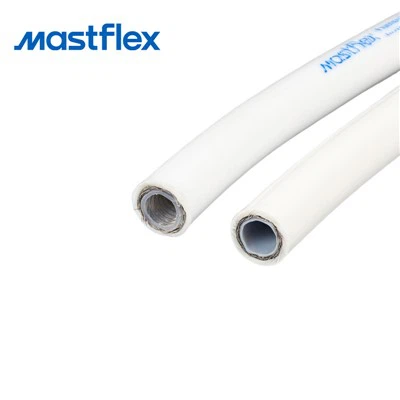
Silicone tubing is a versatile product that finds applications in various industries, from food and beverage to medical and automotive. As a silicone tubing supplier, I often get asked about the materials used to make this essential product. In this blog post, I'll break down the common materials that go into silicone tubing and why they matter.
Base Silicone Polymer
At the heart of silicone tubing is the base silicone polymer. This polymer is made up of silicon, oxygen, carbon, and hydrogen atoms arranged in a unique molecular structure. The most common type of silicone polymer used in tubing is polydimethylsiloxane (PDMS). PDMS has excellent flexibility, high temperature resistance, and low toxicity, making it ideal for a wide range of applications.
The production of PDMS starts with silicon metal, which is reacted with methyl chloride to form dimethyldichlorosilane. This intermediate compound is then hydrolyzed and polymerized to create the PDMS polymer. The resulting polymer can be further modified to achieve different properties, such as hardness, transparency, and chemical resistance.
Fillers
Fillers are added to the base silicone polymer to enhance its mechanical properties and performance. One of the most common fillers used in silicone tubing is fumed silica. Fumed silica is a fine powder made from silicon dioxide, and it helps to improve the strength, tear resistance, and viscosity of the silicone. By adding fumed silica, the tubing becomes more durable and less likely to break or tear under stress.
Another type of filler that may be used is calcium carbonate. Calcium carbonate is a relatively inexpensive filler that can increase the hardness and stiffness of the silicone. It is often used in applications where the tubing needs to maintain its shape or provide some structural support.
Curing Agents
Curing agents are essential for transforming the liquid silicone polymer into a solid, elastic material. There are several types of curing agents available, each with its own advantages and disadvantages. The most common types of curing systems used in silicone tubing are peroxide curing and platinum curing.
Peroxide curing involves adding a peroxide compound to the silicone mixture. When heated, the peroxide decomposes and initiates a cross-linking reaction between the silicone polymer chains. This cross-linking process gives the tubing its final shape and properties. Peroxide-cured silicone tubing is relatively inexpensive and has good chemical resistance, but it may produce some by-products during the curing process that can affect the tubing's performance in certain applications.
Platinum curing, on the other hand, uses a platinum catalyst to initiate the cross-linking reaction. Platinum-cured silicone tubing is more expensive than peroxide-cured tubing, but it offers several advantages. It has a lower level of extractables, which makes it suitable for applications where purity is critical, such as in the food and beverage and medical industries. Platinum-cured tubing also has better heat resistance and a longer shelf life.


Pigments
Pigments are added to silicone tubing to give it color. This can be useful for identification purposes or to match the tubing to a specific aesthetic requirement. There are a wide range of pigments available, both organic and inorganic. Organic pigments are often used for their bright and vivid colors, while inorganic pigments are preferred for their excellent heat and light resistance.
When choosing pigments for silicone tubing, it's important to ensure that they are compatible with the silicone polymer and the curing system. Incompatible pigments can cause issues such as discoloration, poor dispersion, or reduced mechanical properties.
Additives
In addition to fillers, curing agents, and pigments, various additives may be added to silicone tubing to improve its performance in specific applications. For example, UV stabilizers can be added to protect the tubing from the damaging effects of sunlight, while flame retardants can be used to make the tubing more fire-resistant.
Antimicrobial agents may also be added to silicone tubing used in medical or food processing applications to prevent the growth of bacteria and other microorganisms. These additives help to ensure the safety and hygiene of the tubing, especially in environments where contamination is a concern.
Applications and the Importance of Material Selection
The choice of materials for silicone tubing depends largely on its intended application. For example, in the food and beverage industry, tubing must be made from materials that are safe for contact with food and comply with relevant regulations. Platinum-cured silicone tubing is often the preferred choice in this industry due to its low extractables and high purity.
In the medical field, silicone tubing is used in a variety of applications, such as catheters, respiratory devices, and fluid transfer systems. Medical-grade silicone tubing must meet strict quality and safety standards, and it is typically made from high-quality silicone polymers with minimal additives.
In the automotive industry, silicone tubing is used for applications such as coolant hoses, vacuum lines, and turbocharger intercooler hoses. Tubing in this industry needs to withstand high temperatures, pressure, and chemical exposure, so materials with excellent heat and chemical resistance are essential.
If you're in the market for silicone tubing, it's important to choose a supplier who understands the specific requirements of your application and can provide tubing made from the right materials. As a silicone tubing supplier, we offer a wide range of products to meet the needs of different industries. Whether you need Silicone Covered PTFE Hose for high-temperature applications, Sanitary Hose Assemblies for food and beverage processing, or Silicone Pump Tubing for fluid transfer, we've got you covered.
Conclusion
Silicone tubing is a complex product made from a combination of base silicone polymers, fillers, curing agents, pigments, and additives. The choice of materials depends on the specific requirements of the application, such as temperature resistance, chemical compatibility, and purity. By understanding the materials used in silicone tubing, you can make an informed decision when selecting the right product for your needs.
If you have any questions about our silicone tubing products or need help choosing the right material for your application, don't hesitate to reach out. We're here to assist you with all your silicone tubing needs and look forward to discussing your requirements further.
References
- "Silicone Elastomers: Chemistry and Technology" by W. Noll
- "Handbook of Silicones" edited by George H. Wagner
- Industry standards and regulations related to silicone tubing in different sectors, such as FDA regulations for food contact materials and ISO standards for medical devices.