


As a supplier of PTFE braided hoses, I often get asked about the tensile strength of these hoses. It's a crucial question, especially for industries that rely on these hoses in high - stress applications. So, let's dive right in and explore what the tensile strength of a PTFE braided hose really means.
Understanding Tensile Strength
First off, what is tensile strength? In simple terms, tensile strength is the maximum amount of tensile (pulling) stress that a material can withstand before it breaks or fails. For a PTFE braided hose, this means how much force you can apply to stretch the hose lengthwise before it tears apart.
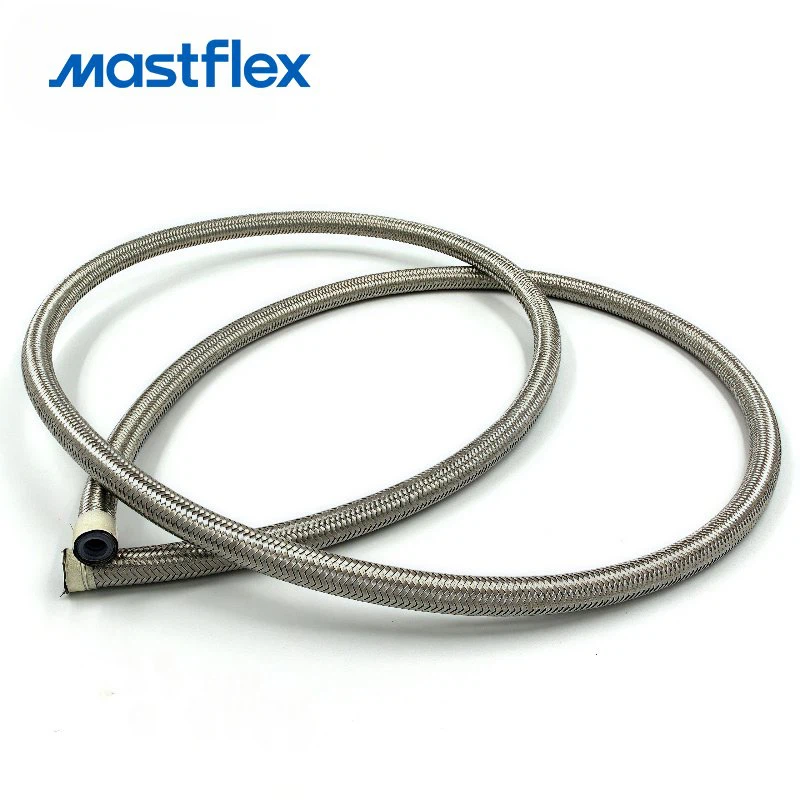
PTFE, or polytetrafluoroethylene, is known for its excellent chemical resistance, low friction, and high - temperature tolerance. But when it comes to pure PTFE, its tensile strength on its own isn't super high. That's where the braiding comes in. The braided layer, usually made of materials like stainless steel or other high - strength fibers, significantly boosts the overall tensile strength of the hose.
Factors Affecting Tensile Strength
Braiding Material
The type of material used for braiding has a huge impact on the tensile strength. For instance, Stainless Steel PTFE Hose uses stainless - steel braiding. Stainless steel is incredibly strong and offers great resistance to corrosion. This makes the hose suitable for harsh environments where it might be exposed to chemicals or high - humidity conditions. On the other hand, some hoses might use synthetic fibers for braiding. These fibers can also provide good tensile strength while being lighter in weight, which can be an advantage in applications where weight is a concern.
Braiding Pattern
The pattern in which the braiding is done also affects the tensile strength. A tight and well - structured braiding pattern distributes the stress evenly across the hose. This means that when a pulling force is applied, the stress is spread out rather than concentrated in one area. As a result, the hose can withstand more force without breaking. Different braiding patterns are designed for different applications, and choosing the right one is crucial for getting the desired tensile strength.
Hose Diameter and Wall Thickness
The diameter and wall thickness of the PTFE hose itself play a role in its tensile strength. Generally, a thicker - walled hose can withstand more pulling force than a thinner - walled one. Similarly, the diameter matters because a larger - diameter hose might have more surface area for the braiding to grip onto, which can enhance its overall strength. However, these factors also need to be balanced with other requirements such as flexibility and flow rate.
Measuring Tensile Strength
Tensile strength is usually measured in units of force per unit area, like pounds per square inch (psi) or megapascals (MPa). To determine the tensile strength of a PTFE braided hose, specialized testing equipment is used. The hose is clamped at both ends, and a gradually increasing pulling force is applied until the hose fails. The maximum force applied just before failure is recorded, and the tensile strength is calculated based on the cross - sectional area of the hose.

It's important to note that the reported tensile strength values are often based on ideal laboratory conditions. In real - world applications, factors like temperature, chemical exposure, and vibration can affect the actual performance of the hose. So, when choosing a PTFE braided hose, it's essential to consider these real - world factors and choose a hose with a tensile strength that provides a sufficient safety margin.
Applications and Tensile Strength Requirements
Chemical Processing
In the chemical processing industry, PTFE braided hoses are used to transfer various chemicals. These hoses need to have a high tensile strength because they might be subjected to pressure changes, movement, and sometimes even accidental pulling. For example, when transferring corrosive acids or solvents, a PTFE Lined Braided Hose with a high tensile strength ensures that the hose doesn't rupture, preventing dangerous chemical spills.
Aerospace
The aerospace industry has extremely high standards for all components, including hoses. PTFE braided hoses are used in aircraft for fuel lines, hydraulic systems, and other critical applications. In these environments, the hoses need to withstand high - pressure conditions and vibrations during flight. A high tensile strength is essential to ensure the reliability and safety of the aircraft systems.
Food and Beverage
In the food and beverage industry, PTFE braided hoses are used for transferring liquids and powders. While the tensile strength requirements might not be as extreme as in aerospace or chemical processing, they still need to be sufficient to handle normal handling and movement. For example, during the filling and emptying of tanks, the hoses need to be able to withstand the pulling forces without breaking.
Our Product Range and Tensile Strength
At our company, we offer a wide range of PTFE braided hoses with different tensile strengths to meet the diverse needs of our customers. Our Stainless Steel PTFE Hose is a popular choice for industries that require high - strength and corrosion - resistant hoses. It has a well - crafted stainless - steel braiding that provides excellent tensile strength and durability.
Our PTFE Lined Braided Hose is designed for applications where chemical resistance is a top priority. The lining provides protection against corrosive substances, while the braiding ensures that the hose can withstand the necessary pulling forces.
We also have PTFE Corrugated Hose, which offers a good balance between flexibility and tensile strength. The corrugated design allows for easy bending and movement, while the braiding provides the required strength.
Conclusion
The tensile strength of a PTFE braided hose is a critical factor that determines its performance and suitability for different applications. By understanding the factors that affect tensile strength, such as braiding material, pattern, hose diameter, and wall thickness, you can make an informed decision when choosing a hose for your specific needs.
If you're in the market for high - quality PTFE braided hoses, we'd love to have a chat with you. Whether you need a hose with a specific tensile strength for a particular application or just want to learn more about our products, feel free to reach out. We're here to help you find the perfect solution for your business.
References
- "Handbook of PTFE Technology" - A comprehensive guide on PTFE materials and their properties.
- Industry standards and specifications for PTFE braided hoses from relevant organizations.


