


PTFE braided hoses are widely used in various industrial applications due to their excellent chemical resistance, high temperature tolerance, and flexibility. One of the key performance indicators of these hoses is their shear strength. In this blog post, we'll explore what shear strength means for PTFE braided hoses, factors that affect it, and why it's crucial for your applications. As a PTFE Braided Hose supplier, we have in - depth knowledge and experience in this area, and we're here to share valuable insights with you.
Understanding Shear Strength
Shear strength refers to the maximum amount of shear stress that a material can withstand before it fails. In the context of a PTFE braided hose, shear stress occurs when two parts of the hose are forced to slide past each other. This can happen in several real - world scenarios. For example, when the hose is bent sharply, or when there are lateral forces acting on it during installation or operation.
Imagine a PTFE braided hose being used in a chemical transfer system where the hose is routed through a complex piping layout with multiple bends. As the fluid flows through the hose and the hose is bent, shear forces are generated within the hose structure. If the shear strength of the hose is not sufficient, the hose may start to delaminate, the braiding may break, or the PTFE liner could be damaged, leading to leaks and potential safety hazards.
Components of a PTFE Braided Hose and Their Impact on Shear Strength
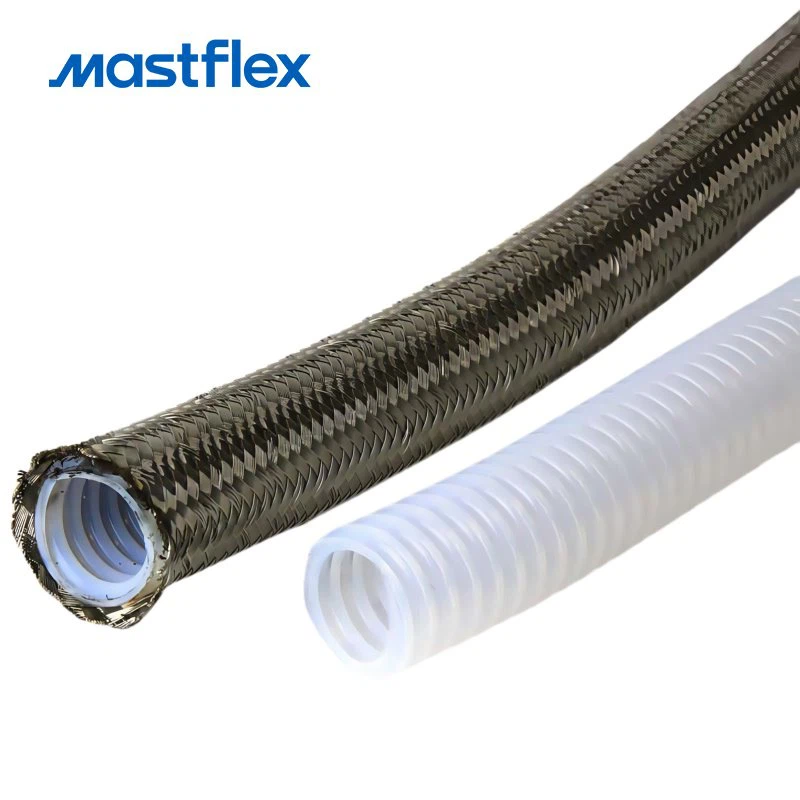
A typical PTFE braided hose consists of a PTFE liner and a braided outer layer, which can be made of materials such as stainless steel, fiberglass, or nylon. Each component plays a significant role in determining the shear strength of the hose.
PTFE Liner
The PTFE liner is the innermost layer of the hose that comes into contact with the fluid being transported. PTFE has inherent properties that contribute to the overall shear resistance of the hose. It has a low coefficient of friction, which means that when shear forces are applied, the material is less likely to stick and tear. However, the thickness and quality of the PTFE liner also matter. A thicker liner generally provides more resistance to shear forces. For example, in high - pressure applications where shear stress is likely to be higher, a thicker PTFE liner can help prevent the liner from being damaged by the shear forces. You can find more information about PTFE Lined Braided Hose.
Braided Outer Layer
The braided outer layer serves multiple purposes, one of which is to enhance the shear strength of the hose. The braiding pattern and the material used for the braid are critical factors. Stainless steel braiding is a popular choice because of its high strength and durability. The interwoven structure of the stainless - steel braid distributes the shear forces evenly across the hose surface, preventing localized stress concentrations.
Fiberglass and nylon braids are also used, especially in applications where weight or cost is a concern. Fiberglass braids offer good strength and heat resistance, while nylon braids are more flexible. However, compared to stainless - steel braids, they may have lower shear strength. You can explore our Braided PTFE Hose Smooth Bore and Braided PTFE Hose Convoluted options, which feature different braiding materials and patterns to meet diverse needs.
Factors Affecting the Shear Strength of PTFE Braided Hoses
Several external factors can influence the shear strength of PTFE braided hoses.
Temperature
Temperature has a significant impact on the mechanical properties of both the PTFE liner and the braided outer layer. At high temperatures, PTFE may become softer and more prone to deformation. This reduces its ability to resist shear forces. For the braided layer, high temperatures can cause the metal (in the case of stainless - steel braids) to lose some of its strength. On the other hand, at extremely low temperatures, PTFE can become brittle, and the braiding may become more rigid, which also affects the hose's shear strength.

Chemical Exposure
Since PTFE braided hoses are often used to transport chemicals, the type of chemicals in contact with the hose can affect its shear strength. Some chemicals may react with the PTFE liner or the braiding material, causing degradation. For example, strong oxidizing agents can attack the PTFE liner, weakening its structure and reducing its shear resistance.
Installation Conditions
Improper installation can also lead to a reduction in shear strength. If the hose is over - bent during installation, it creates high - stress areas where shear failure is more likely to occur. Additionally, if the hose is not properly supported, it can experience excessive movement and vibration, which increases the shear stress on the hose.
Importance of Shear Strength in Different Applications
The shear strength of PTFE braided hoses is crucial in various industrial applications.
Chemical Processing
In chemical processing plants, PTFE braided hoses are used to transfer a wide range of chemicals, including acids, bases, and solvents. The hoses need to be able to withstand the shear forces generated during the transfer process, especially in systems with pumps and valves that can cause sudden changes in fluid flow. A hose with insufficient shear strength can fail, leading to chemical spills, which can be dangerous to workers and the environment.
Food and Beverage Industry
In the food and beverage industry, PTFE braided hoses are used for the transfer of liquids such as juices, syrups, and dairy products. These hoses need to meet strict hygiene standards and also have sufficient shear strength to withstand the forces involved in the filling and dispensing processes. Any failure of the hose can contaminate the product and lead to significant losses.
Aerospace
In aerospace applications, PTFE braided hoses are used for fuel transfer, hydraulic systems, and environmental control systems. The hoses need to be able to withstand extreme conditions, including high - speed fluid flow, vibration, and temperature variations. High shear strength is essential to ensure the reliability and safety of these critical systems.
Testing the Shear Strength of PTFE Braided Hoses
To ensure that our PTFE braided hoses meet the required shear strength standards, we conduct rigorous testing. One common method is the torsion test, where the hose is fixed at one end and twisted at the other. The amount of torque required to cause failure is measured, and this value is used to determine the shear strength of the hose.
We also use finite element analysis (FEA) to simulate the behavior of the hose under different shear stress conditions. This allows us to optimize the design of the hose, including the thickness of the PTFE liner and the braiding pattern, to achieve the desired shear strength.
Choosing the Right PTFE Braided Hose Based on Shear Strength Requirements
When selecting a PTFE braided hose for your application, it's important to consider the shear strength requirements. Here are some steps to help you make the right choice:
- Understand Your Application
- Determine the maximum shear forces that the hose will be exposed to. Consider factors such as the fluid flow rate, pressure, temperature, and any potential bending or lateral forces during installation and operation.
- Check the Manufacturer's Specifications
- Look for the shear strength ratings provided by the manufacturer. Make sure the hose you choose has a shear strength that exceeds the requirements of your application.
- Consider the Hose Construction
- As mentioned earlier, the PTFE liner thickness and the braiding material and pattern can significantly affect the shear strength. Choose a hose with a construction that is suitable for your specific application.
Conclusion
Shear strength is a critical property of PTFE braided hoses. Understanding what it is, the factors that affect it, and its importance in different applications is essential for choosing the right hose for your needs. As a PTFE Braided Hose supplier, we are committed to providing high - quality hoses with excellent shear strength and other performance characteristics.
If you have any questions about the shear strength of our PTFE braided hoses or need help in selecting the right hose for your application, we encourage you to get in touch with us for procurement and further discussion. Our team of experts is ready to assist you.
References
- Handbook of PTFE Technology
- Industrial Hose Standards and Testing Methods
- Chemical Compatibility and Material Science for Hoses


