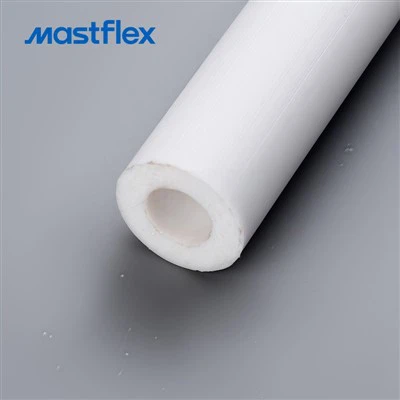
Hey there! As a supplier of Chemical Pump Tubing, I often get asked about the chemical resistance of our tubing to solvents. It's a super important topic, especially for those who rely on chemical pumps in their daily operations. So, let's dive right in and explore what chemical resistance really means and how it applies to our Chemical Pump Tubing.
Understanding Chemical Resistance
First off, what do we mean by chemical resistance? Simply put, it's the ability of a material to withstand the effects of a chemical without undergoing significant degradation. When it comes to Chemical Pump Tubing, this is crucial because the tubing is constantly in contact with various solvents. If the tubing isn't chemically resistant, it can break down, leading to leaks, reduced pump efficiency, and even safety hazards.
There are a few factors that determine the chemical resistance of tubing. One of the main ones is the material the tubing is made from. Different materials have different chemical structures, which react differently to solvents. For example, some materials might be highly resistant to acids but not so much to bases, while others might have the opposite reaction.


Another factor is the concentration of the solvent. A highly concentrated solvent is more likely to cause damage to the tubing than a diluted one. The temperature also plays a role. Higher temperatures can speed up chemical reactions, so the tubing might degrade faster at elevated temperatures.
Common Solvents and Their Effects
Let's take a look at some common solvents and how our Chemical Pump Tubing stands up to them.
Organic Solvents
Organic solvents like acetone, toluene, and ethanol are widely used in many industries. Acetone is a powerful solvent that can dissolve many plastics. However, our High Purity Peristaltic Pump Tubing is made from materials that have good resistance to acetone. It can handle short - term exposure without significant damage, but for long - term use, we might recommend our Mastflex Peristaltic Pump Tubing, which has even better resistance to a wide range of organic solvents.
Toluene is another common organic solvent. It can be quite aggressive towards some materials, but our tubing is designed to resist its effects. The silicone in our Silicone Tubing Peristaltic Pump has a certain level of resistance to toluene, making it a good choice for applications where toluene is present.
Ethanol is a relatively mild organic solvent. Most of our Chemical Pump Tubing can handle ethanol without any major issues. In fact, ethanol is often used in cleaning processes, and our tubing can withstand repeated exposure during these cleaning cycles.
Inorganic Solvents
Inorganic solvents like acids and bases are also commonly used. Strong acids such as hydrochloric acid and sulfuric acid can be very corrosive. Our tubing is available in materials that are specifically formulated to resist the effects of these acids. For example, some of our tubing can handle hydrochloric acid up to a certain concentration without degrading.
Bases like sodium hydroxide are also a concern. Our tubing materials are tested to ensure they can resist the caustic nature of bases. However, as with acids, the concentration and temperature of the base solution can affect the tubing's performance.
Testing and Quality Assurance
We take chemical resistance very seriously. That's why we conduct extensive testing on our Chemical Pump Tubing. We expose the tubing to different solvents at various concentrations and temperatures for extended periods. This helps us understand how the tubing will perform in real - world applications.
Our quality assurance team uses a variety of techniques to evaluate the tubing's chemical resistance. They look for signs of swelling, cracking, or changes in mechanical properties. If the tubing passes our rigorous tests, we can be confident that it will perform well in the hands of our customers.
Choosing the Right Tubing for Your Application
When it comes to choosing the right Chemical Pump Tubing for your application, you need to consider the type of solvent you'll be using, its concentration, and the operating temperature. If you're dealing with a highly aggressive solvent, you might want to opt for our more chemically resistant options like the Mastflex Peristaltic Pump Tubing.
If you need high - purity tubing for applications where contamination is a concern, our High Purity Peristaltic Pump Tubing is a great choice. And if you're looking for tubing that's flexible and has good resistance to a variety of solvents, our Silicone Tubing Peristaltic Pump could be the answer.
Why Choose Our Chemical Pump Tubing
There are several reasons why you should choose our Chemical Pump Tubing. First of all, our tubing is made from high - quality materials. We source the best raw materials and use advanced manufacturing processes to ensure consistent quality.
Secondly, we offer a wide range of tubing options. Whether you need tubing for a small - scale laboratory application or a large - scale industrial process, we have the right product for you.
We also provide excellent customer support. Our team of experts is always ready to help you choose the right tubing for your needs. We can answer any questions you might have about chemical resistance or other aspects of our products.
Contact Us for Your Tubing Needs
If you're in the market for Chemical Pump Tubing and want to learn more about our products' chemical resistance to solvents, don't hesitate to get in touch. We're here to help you find the perfect tubing solution for your application. Whether you're a small business or a large corporation, we can work with you to meet your requirements.
References
- "Handbook of Chemical Resistance of Plastics and Elastomers"
- Industry standards and guidelines on chemical pump tubing performance