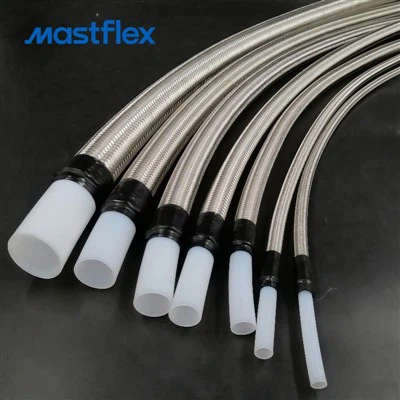
Hey there! I'm a supplier of Silicone Pump Tubing, and today I'm gonna walk you through the manufacturing processes of this super - useful product.
1. Raw Material Preparation
First off, we start with the raw materials. Silicone rubber is the main ingredient for making Silicone Pump Tubing. The silicone rubber comes in a variety of grades, and we carefully select the one that suits the specific requirements of the tubing we're going to make.
The raw silicone rubber is usually in a semi - solid state. It contains polymers, fillers, and additives. The polymers give the silicone its elasticity and flexibility. Fillers are added to improve the mechanical properties like strength and hardness. Additives can enhance certain characteristics such as heat resistance or chemical resistance.
We source high - quality raw materials from reliable suppliers. This ensures that the final product will meet the high standards our customers expect. You can check out more about Silicone Pump Tubing on our website.
2. Mixing
Once we have the raw materials, it's time for mixing. We use special mixing equipment, like internal mixers or open mills. The goal here is to evenly distribute the fillers, additives, and other components throughout the silicone rubber.
During the mixing process, we need to control the temperature and mixing time carefully. If the temperature is too high, the silicone can start to cross - link prematurely, which will affect the quality of the tubing. On the other hand, if the mixing time is not long enough, the components won't be evenly distributed, leading to inconsistent properties in the final product.
This step is crucial because it determines the overall quality and performance of the Silicone Pump Tubing. A well - mixed silicone compound will result in tubing that is strong, flexible, and has excellent chemical and heat resistance.
3. Extrusion
After the mixing is done, we move on to the extrusion process. Extrusion is like squeezing toothpaste out of a tube, but in a more controlled and precise way.
We feed the mixed silicone compound into an extruder. The extruder has a screw that pushes the silicone through a die. The die is a specially designed tool that gives the tubing its shape and size. For example, if we want a tubing with a specific inner diameter and outer diameter, we use a die with the corresponding dimensions.
As the silicone is pushed through the die, it takes on the shape of the tubing. The extrusion process can be continuous, which means we can produce long lengths of tubing in one go. This is very efficient for large - scale production.
Extrusion also allows us to control the wall thickness of the tubing. We can adjust the speed of the extruder and the pressure applied to ensure that the wall thickness is uniform throughout the length of the tubing. This is important for the proper functioning of the Silicone Tubing Peristaltic Pump.
4. Vulcanization
Once the tubing is extruded, it's in a semi - finished state. To make it strong and durable, we need to vulcanize it. Vulcanization is a chemical process that cross - links the polymer chains in the silicone rubber.
There are different methods of vulcanization, such as hot air vulcanization and steam vulcanization. In hot air vulcanization, the tubing is passed through a heated chamber where the high temperature causes the cross - linking to occur. Steam vulcanization, on the other hand, uses steam to provide the heat and moisture needed for the cross - linking reaction.
The vulcanization process is carefully controlled. We need to ensure that the temperature, time, and pressure are just right. If the vulcanization is not done properly, the tubing may be too soft or too brittle. A well - vulcanized Silicone Pump Tubing will have good mechanical properties, such as high tensile strength and tear resistance.
5. Cutting and Finishing
After vulcanization, the tubing is cut into the desired lengths. We use precision cutting tools to ensure that the cuts are clean and accurate. The length of the tubing can vary depending on the customer's requirements.
We also do some finishing touches. This may include removing any burrs or rough edges from the cut ends of the tubing. We may also print markings on the tubing, such as the size, brand, or other relevant information.
6. Quality Control
Quality control is an essential part of the manufacturing process. We have a strict quality control system in place to ensure that every piece of Silicone Pump Tubing meets our high standards.
We test the tubing for various properties, such as hardness, tensile strength, elongation, and chemical resistance. We use specialized testing equipment to perform these tests. For example, we use a hardness tester to measure the hardness of the tubing, and a tensile testing machine to measure its tensile strength.
Any tubing that fails to meet the quality standards is rejected. This ensures that only the best - quality products are delivered to our customers.
7. Packaging
Once the tubing passes the quality control tests, it's time for packaging. We use appropriate packaging materials to protect the tubing during transportation and storage.
The packaging may include plastic bags, cardboard boxes, or other protective materials. We also label the packages with important information, such as the product name, size, quantity, and handling instructions.


Why Choose Our Silicone Pump Tubing?
Our Silicone Pump Tubing is made using the latest manufacturing processes and high - quality raw materials. We have a team of experienced professionals who ensure that every step of the manufacturing process is carried out with precision.
We offer a wide range of sizes and specifications to meet the diverse needs of our customers. Whether you need a small - diameter tubing for a laboratory application or a large - diameter tubing for an industrial process, we've got you covered.
If you're interested in our Mastflex Peristaltic Pump Tubing or any other Silicone Pump Tubing products, don't hesitate to reach out. We're always happy to discuss your requirements and provide you with the best solutions.
If you have any questions about our products or the manufacturing processes, feel free to contact us. We're here to help you make the right choice for your pumping needs.
References
- Handbook of Silicone Rubber Technology
- Textbook on Polymer Processing
- Industry standards for Silicone Pump Tubing manufacturing