


Testing the integrity of a PTFE (Polytetrafluoroethylene) braided hose is crucial for ensuring its performance, reliability, and safety in various applications. As a PTFE braided hose supplier, I understand the significance of accurate testing methods to provide high - quality products to our customers. In this blog, I will discuss several effective ways to test the integrity of a PTFE braided hose.
Visual Inspection
The first step in testing the integrity of a PTFE braided hose is a thorough visual inspection. This is a simple yet essential process that can reveal many potential issues. Start by examining the outer braid. Look for signs of damage such as broken wires, fraying, or corrosion. A damaged outer braid can compromise the hose's structural integrity and its ability to withstand pressure.
Next, check the PTFE inner tube. Look for any visible cracks, cuts, or abrasions. Even small cracks can lead to leaks over time, especially when the hose is subjected to pressure or temperature changes. Pay close attention to the areas near the fittings, as these are often the points of highest stress.
Inspect the fittings as well. Ensure that they are properly attached to the hose and that there are no signs of loosening, deformation, or corrosion. Any issues with the fittings can lead to leaks and pose a safety risk.
Pressure Testing
Pressure testing is one of the most common and reliable methods for testing the integrity of a PTFE braided hose. This test involves subjecting the hose to a specified pressure to check for leaks or failures.
There are two main types of pressure testing: hydrostatic testing and pneumatic testing. Hydrostatic testing uses water as the testing medium, while pneumatic testing uses air or another gas.
Hydrostatic Testing
Hydrostatic testing is generally considered safer and more accurate than pneumatic testing. To perform a hydrostatic test, first, fill the hose with water and remove all air from the system. Then, gradually increase the pressure to the specified test pressure using a pressure pump. Hold the pressure for a set period, typically 10 - 30 minutes, and carefully observe the hose for any signs of leakage.
The advantage of hydrostatic testing is that water is incompressible, so any pressure drop indicates a leak. Additionally, water is less likely to cause an explosion in case of a sudden failure compared to a gas. However, hydrostatic testing requires proper drainage and drying of the hose after the test to prevent corrosion.
Pneumatic Testing
Pneumatic testing uses air or another gas to test the hose. The process is similar to hydrostatic testing, but instead of water, the hose is filled with gas. Pneumatic testing can be quicker and more convenient in some cases, especially for hoses that cannot be easily filled with water.
However, pneumatic testing is more dangerous than hydrostatic testing because gases are compressible, and a sudden failure can result in a violent explosion. Therefore, strict safety precautions must be taken when performing pneumatic testing, such as using appropriate safety barriers and pressure - relief devices.
Leak Detection
In addition to pressure testing, leak detection is an important part of testing the integrity of a PTFE braided hose. There are several methods for leak detection, including the use of soap solution, helium leak detectors, and ultrasonic leak detectors.
Soap Solution Method
The soap solution method is a simple and cost - effective way to detect leaks. Apply a soapy solution to the hose and fittings, and then pressurize the hose slightly. If there is a leak, bubbles will form at the leak point. This method is suitable for detecting relatively large leaks and is commonly used in field inspections.
Helium Leak Detectors
Helium leak detectors are highly sensitive and can detect very small leaks. The hose is first pressurized with helium, and then a detector is used to scan the outside of the hose for helium leakage. Helium is used because it is a small molecule that can easily pass through small holes, and it is also non - flammable and non - toxic. This method is often used in high - precision applications where even the smallest leaks can cause problems.
Ultrasonic Leak Detectors
Ultrasonic leak detectors work by detecting the high - frequency sound waves produced by a leak. When a gas or liquid escapes through a small hole, it creates a turbulent flow that generates ultrasonic waves. The detector can pick up these waves and indicate the presence of a leak. Ultrasonic leak detectors are useful for detecting leaks in noisy environments and can be used to locate leaks quickly.
Flexing and Vibration Testing
PTFE braided hoses are often subjected to flexing and vibration in real - world applications. Therefore, it is important to test the hose's integrity under these conditions.
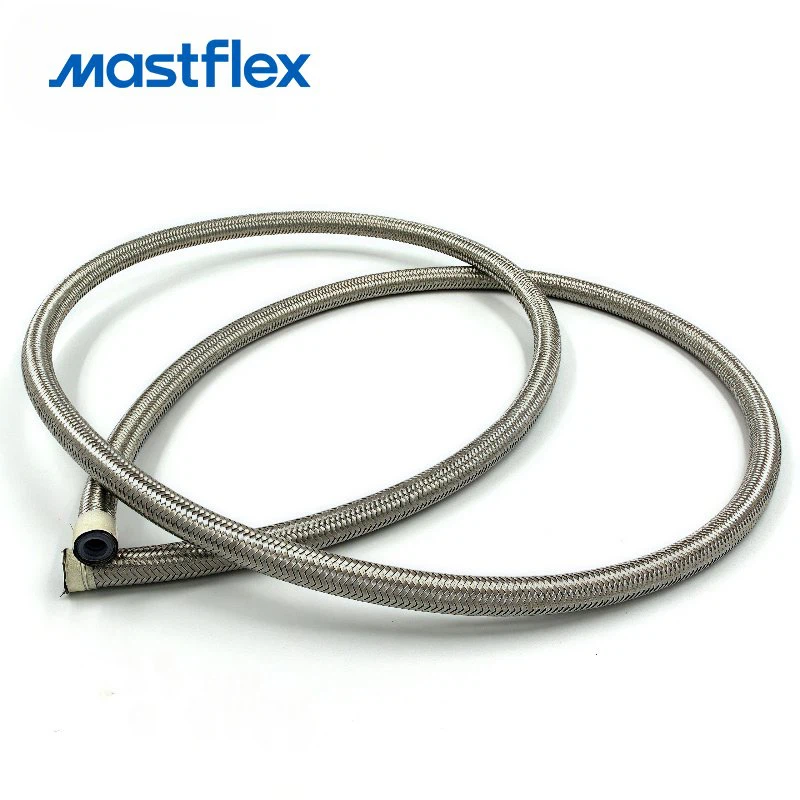

Flexing testing involves bending the hose repeatedly through a specified angle and number of cycles. This test can simulate the movement of the hose in use and check for any signs of damage or fatigue. Vibration testing, on the other hand, subjects the hose to a controlled vibration to see if it can withstand the dynamic forces without failing.
During flexing and vibration testing, it is important to monitor the hose for any changes in its appearance, such as cracks or loosening of the fittings. Any signs of damage indicate that the hose may not be suitable for applications where flexing or vibration is expected.
Temperature Testing
PTFE braided hoses are designed to operate within a certain temperature range. Temperature testing is used to ensure that the hose can maintain its integrity at different temperatures.
To perform temperature testing, the hose is placed in a temperature - controlled environment and subjected to a series of temperature cycles. The test can include both high - temperature and low - temperature exposure. During the test, the hose is monitored for any changes in its physical properties, such as hardness, flexibility, or dimensional stability.
High - temperature testing can reveal issues such as degradation of the PTFE material or melting of the fittings. Low - temperature testing can check for brittleness and cracking of the hose. By testing the hose at different temperatures, we can ensure that it will perform reliably in various operating conditions.
Conclusion
Testing the integrity of a PTFE braided hose is a comprehensive process that involves multiple methods. Visual inspection, pressure testing, leak detection, flexing and vibration testing, and temperature testing are all important steps in ensuring the quality and reliability of the hose.
As a PTFE braided hose supplier, we are committed to providing our customers with high - quality products. We use these testing methods to ensure that our Silicone Covered PTFE Hose, Stainless Steel PTFE Hose, and PTFE Hose Assembly meet the highest standards.
If you are in need of PTFE braided hoses for your application, we invite you to contact us for further discussion. Our team of experts can help you select the right hose and provide you with detailed information about our testing procedures and product specifications. We look forward to working with you to meet your hose requirements.
References
- ASME B31.3 Process Piping Code
- ASTM D2517 Standard Specification for PTFE Tubing
- ISO 14743 Rubber and Plastic Hoses - Determination of Flexing - Endurance by the Ozone Chamber Method


