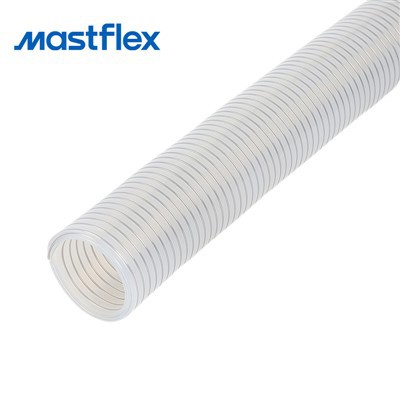
Fluoropolymer tubing is widely used in various industries due to its excellent chemical resistance, high-temperature stability, and low friction properties. One crucial factor that significantly impacts the performance of fluoropolymer tubing is the internal surface smoothness. In this blog, we will explore how the internal surface smoothness of fluoropolymer tubing affects flow rates and why it matters for different applications. As a leading fluoropolymer tubing supplier, we understand the importance of providing high-quality tubing with the right surface characteristics to meet our customers' needs.
Understanding the Basics of Flow in Fluoropolymer Tubing
Before delving into the impact of surface smoothness on flow rates, it's essential to understand the basic principles of fluid flow in tubing. When a fluid flows through a tube, it experiences resistance due to the friction between the fluid and the tube's inner surface. This resistance is known as frictional resistance or drag, and it affects the flow rate of the fluid. The smoother the internal surface of the tube, the lower the frictional resistance, and the higher the flow rate.
The Role of Surface Smoothness in Flow Rates
The internal surface smoothness of fluoropolymer tubing plays a critical role in determining the flow rate of fluids. A smooth surface reduces the frictional resistance between the fluid and the tube wall, allowing the fluid to flow more freely. This results in a higher flow rate and better overall performance.
In contrast, a rough or uneven surface can cause turbulence and increased frictional resistance, which can impede the flow of the fluid. Turbulence can lead to energy losses, pressure drops, and reduced flow rates. Additionally, rough surfaces can also cause the fluid to stick to the tube wall, further reducing the flow rate.
Measuring Surface Smoothness
Surface smoothness is typically measured using a parameter called surface roughness, which is a quantitative measure of the irregularities on the surface of the tube. The most common unit of measurement for surface roughness is the arithmetic average roughness (Ra), which represents the average deviation of the surface profile from the mean line.
A lower Ra value indicates a smoother surface, while a higher Ra value indicates a rougher surface. For fluoropolymer tubing, a smooth internal surface with a low Ra value is desirable to ensure optimal flow rates.
Applications and the Importance of Surface Smoothness
The importance of surface smoothness in fluoropolymer tubing varies depending on the application. Here are some examples of industries and applications where surface smoothness is crucial:


Chemical Processing
In chemical processing applications, fluoropolymer tubing is often used to transport corrosive chemicals. A smooth internal surface is essential to prevent the accumulation of chemicals on the tube wall, which can lead to corrosion and reduced flow rates. Additionally, a smooth surface can help to minimize the risk of chemical reactions and ensure the integrity of the tubing.
Food and Beverage
In the food and beverage industry, fluoropolymer tubing is used for the transfer of liquids and gases. A smooth internal surface is necessary to prevent the growth of bacteria and other microorganisms, which can contaminate the food or beverage. Additionally, a smooth surface can help to maintain the quality and flavor of the product by preventing the absorption of flavors and odors.
Pharmaceutical
In the pharmaceutical industry, fluoropolymer tubing is used for the transfer of drugs and other pharmaceutical products. A smooth internal surface is critical to ensure the purity and integrity of the product. Additionally, a smooth surface can help to prevent the adsorption of drugs on the tube wall, which can affect the dosage and efficacy of the medication.
Our Fluoropolymer Tubing Products
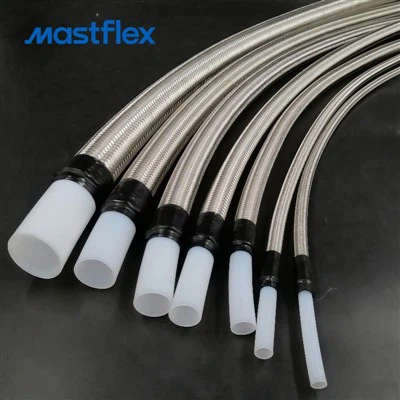
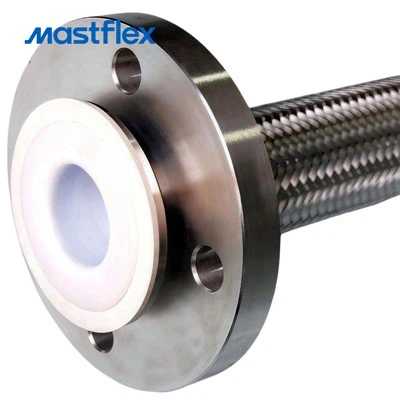
As a fluoropolymer tubing supplier, we offer a wide range of tubing products with different surface smoothness characteristics to meet the needs of various applications. Our products include PTFE Braided Hose, Braided PTFE Hose Smooth Bore, and PTFE Lined Hose.
Our PTFE braided hoses are designed to provide excellent chemical resistance and high-pressure performance. The smooth bore design of our braided PTFE hoses ensures optimal flow rates and minimizes the risk of fluid contamination. Our PTFE lined hoses are ideal for applications where chemical resistance and flexibility are required. The smooth internal surface of the PTFE lining helps to prevent the accumulation of chemicals and ensures the integrity of the tubing.
Conclusion
The internal surface smoothness of fluoropolymer tubing has a significant impact on flow rates and overall performance. A smooth surface reduces frictional resistance, minimizes turbulence, and allows fluids to flow more freely. This is particularly important in applications where high flow rates, chemical resistance, and product purity are required.
As a fluoropolymer tubing supplier, we are committed to providing high-quality tubing products with the right surface characteristics to meet our customers' needs. If you are interested in learning more about our fluoropolymer tubing products or have any questions about how surface smoothness affects flow rates, please contact us. We would be happy to discuss your specific requirements and provide you with the best solutions for your application.
References
- Bird, R. B., Stewart, W. E., & Lightfoot, E. N. (2002). Transport Phenomena (2nd ed.). Wiley.
- Incropera, F. P., & DeWitt, D. P. (2002). Fundamentals of Heat and Mass Transfer (5th ed.). Wiley.
- Holman, J. P. (2002). Heat Transfer (9th ed.). McGraw-Hill.