


Hey there! As a supplier of sterile silicone tubing, I often get asked if our product can be used in semiconductor manufacturing. It's a great question, and I'm here to break it down for you.
First off, let's talk about what semiconductor manufacturing involves. Semiconductors are the building blocks of modern electronics, used in everything from smartphones to computers and cars. The manufacturing process is highly precise and requires a clean, controlled environment to prevent contamination. Any impurities or particles can lead to defects in the semiconductors, which can affect their performance and reliability.
So, can sterile silicone tubing fit the bill? Well, sterile silicone tubing has a lot going for it in this regard. Silicone is a synthetic polymer known for its excellent chemical resistance, flexibility, and biocompatibility. When it's made sterile, it means it's free from living microorganisms, which is crucial in a clean manufacturing environment like semiconductor production.
One of the key advantages of using sterile silicone tubing in semiconductor manufacturing is its chemical inertness. It doesn't react easily with other chemicals, which is important because semiconductor manufacturing often involves the use of various chemicals for processes like etching, cleaning, and doping. If the tubing were to react with these chemicals, it could introduce contaminants into the system, which is a big no - no.
Another plus is its flexibility. In semiconductor manufacturing facilities, there are often complex setups with equipment that needs to be connected in different ways. Sterile silicone tubing can be easily bent and routed around obstacles without kinking or breaking. This makes it easy to install and use in the various fluid transfer systems within the manufacturing process.
The biocompatibility of silicone is also a significant factor. In some semiconductor manufacturing processes, there might be a need to handle fluids that come into contact with biological materials or are used in processes that require a high level of purity. Since silicone is biocompatible, it won't cause any adverse reactions or introduce unwanted substances into these fluids.
Now, let's look at some of the specific applications where sterile silicone tubing can be used in semiconductor manufacturing.
Fluid transfer is one of the most common applications. In semiconductor fabrication, there are many fluids that need to be transferred from one part of the process to another, such as chemicals for cleaning wafers or gases for deposition processes. Sterile silicone tubing can be used to transfer these fluids safely and efficiently. For example, when transferring a cleaning solution to a wafer - cleaning chamber, the tubing ensures that the solution reaches its destination without being contaminated.
It can also be used in cooling systems. Semiconductor manufacturing equipment generates a lot of heat, and cooling is essential to maintain the proper operating temperature. Silicone tubing can be used to circulate coolant through the equipment, helping to dissipate the heat. Its flexibility allows it to be easily integrated into the cooling system, and its chemical resistance ensures that it won't degrade over time due to the coolant.
In addition to these applications, sterile silicone tubing can also be used in filtration systems. Filters are used in semiconductor manufacturing to remove particles and impurities from fluids and gases. The tubing can be used to connect the filters to the rest of the system, ensuring a clean and efficient flow of the filtered substances.
But, like any product, there are also some considerations when using sterile silicone tubing in semiconductor manufacturing. One of the main concerns is the potential for outgassing. Outgassing is the release of volatile compounds from the tubing material. In a semiconductor manufacturing environment, even a small amount of outgassing can contaminate the process. However, high - quality sterile silicone tubing is designed to have low outgassing rates, which minimizes this risk.
Another consideration is the cost. Sterile silicone tubing can be more expensive than some other types of tubing. But when you consider the benefits it offers in terms of preventing contamination and ensuring the quality of the semiconductor products, the cost can be justified.
If you're in the semiconductor manufacturing industry and are looking for high - quality sterile silicone tubing, we've got you covered. We offer a wide range of sterile silicone tubing products, including Pharmaceutical Silicone Tubing, Silicone Oxygen Tubing, and Clear Silicone Tubing. Our tubing is manufactured to the highest standards, ensuring sterility and performance.

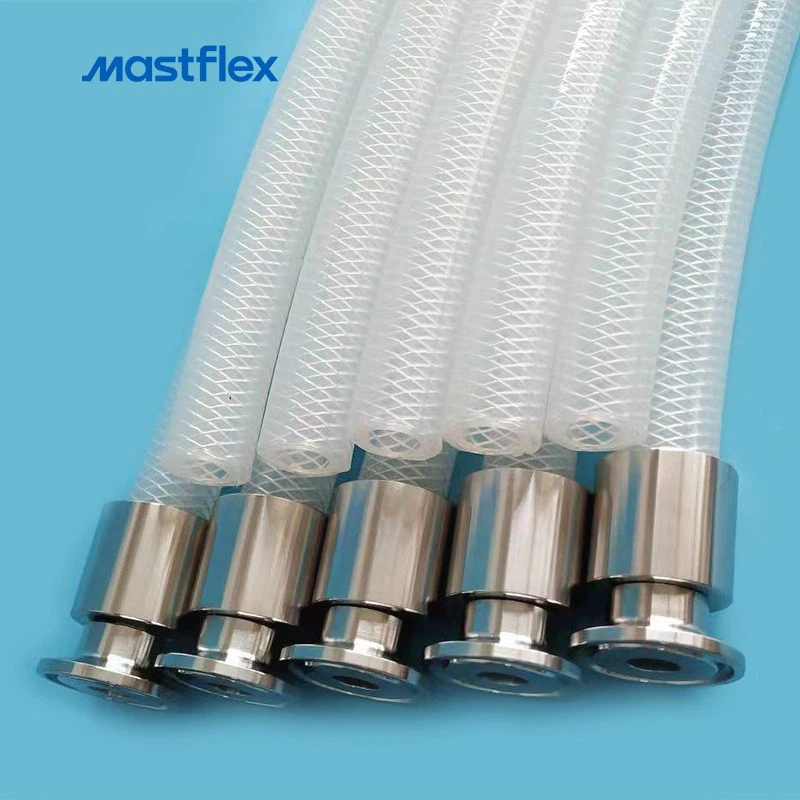
We understand that every semiconductor manufacturing process is unique, and that's why we offer customization options. Whether you need tubing with a specific diameter, length, or level of sterility, we can work with you to meet your requirements.
If you're interested in learning more about how our sterile silicone tubing can benefit your semiconductor manufacturing process, or if you want to discuss your specific needs, don't hesitate to reach out. We're here to help you make the best choice for your business.
In conclusion, sterile silicone tubing has a lot of potential in semiconductor manufacturing. Its chemical inertness, flexibility, biocompatibility, and low outgassing rates make it a suitable choice for various applications in this industry. While there are some considerations like cost and outgassing, the benefits far outweigh the drawbacks. So, if you're in the semiconductor manufacturing business, it's definitely worth considering using sterile silicone tubing for your fluid transfer and other process needs.
References
- "Semiconductor Manufacturing Technology" by S. Wolf and R. N. Tauber
- "Silicone Elastomers: Chemistry and Technology" by W. Noll


