


Can PTFE hose assembly be used in offshore applications? That's a question I get asked a lot as a supplier of PTFE Hose Assembly. And let me tell you, the answer is a big fat yes! In this blog, I'm gonna break down why PTFE hose assemblies are a top - notch choice for offshore work.
First off, let's talk about what PTFE is. PTFE, or polytetrafluoroethylene, is a synthetic fluoropolymer. You might know it by the brand name Teflon. It's got some seriously awesome properties that make it ideal for all sorts of tough jobs, especially in the harsh offshore environment.
One of the main challenges in offshore applications is dealing with corrosive substances. Offshore platforms are constantly exposed to seawater, which is extremely corrosive. There are also all kinds of chemicals used in the oil and gas extraction process. PTFE is highly resistant to corrosion. It can stand up to a wide range of chemicals, acids, and bases without degrading. This means that PTFE hose assemblies can last a long time in these harsh conditions, reducing the need for frequent replacements.
For example, in an oil rig, there are often hoses used to transfer crude oil, which can contain various corrosive elements. A PTFE hose assembly can handle this kind of transfer without getting damaged by the oil's components. It also won't react with the chemicals used in the refining process, ensuring a clean and efficient transfer.
Another crucial factor in offshore applications is temperature resistance. The offshore environment can have extreme temperature variations. During the day, the sun can heat up the equipment, and at night, the temperature can drop significantly. PTFE has a wide temperature range. It can operate in temperatures from - 200°C to 260°C. This makes it suitable for use in different parts of an offshore facility, whether it's in a hot processing area or a cold storage section.
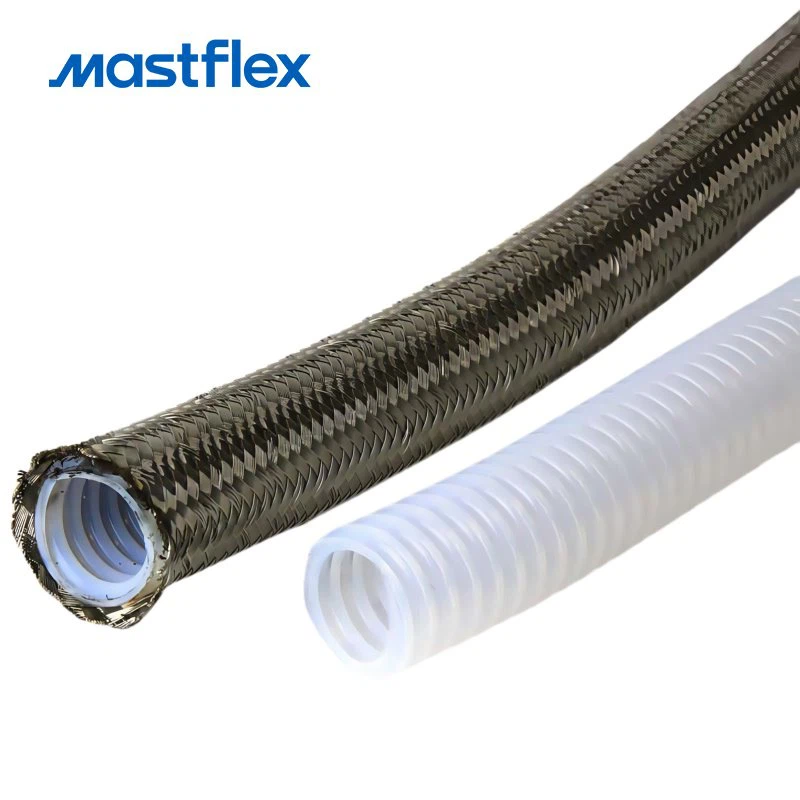
Let's also consider flexibility. Offshore platforms are complex structures with limited space. Hoses need to be flexible enough to be installed in tight spaces and to adapt to the movement of the equipment. PTFE hose assemblies come in different types, like the PTFE Corrugated Hose and the Convoluted PTFE Hose. These hoses are highly flexible, allowing for easy installation and routing around obstacles. They can also withstand repeated bending and flexing without losing their integrity.
The Braided PTFE Hose Convoluted is another great option. The braided design adds extra strength and durability while still maintaining flexibility. It can handle high - pressure applications, which are common in offshore operations. For instance, in a hydraulic system on an offshore crane, the braided PTFE hose can transfer hydraulic fluid at high pressures without bursting or leaking.
In addition to these technical advantages, PTFE hose assemblies are also lightweight. In an offshore setting, weight is a big deal. Every extra pound of equipment adds to the overall load of the platform. The lightweight nature of PTFE hoses makes them easier to handle during installation and reduces the stress on the supporting structures.
Now, let's talk about safety. Offshore operations are high - risk, and safety is of utmost importance. PTFE hose assemblies are non - flammable and have low friction coefficients. The non - flammable property reduces the risk of fire in case of a spark or an overheating situation. The low friction coefficient means that there is less resistance when fluids flow through the hoses, reducing the energy consumption and the risk of pressure build - up, which could lead to a rupture.
Maintenance is also a key consideration. PTFE hoses are relatively easy to maintain. They don't require special coatings or treatments to protect them from the environment. A simple visual inspection from time to time can help detect any signs of wear or damage. And if a part of the hose assembly does need to be replaced, it's usually a straightforward process.
But like any product, PTFE hose assemblies also have some limitations. They can be more expensive upfront compared to some other types of hoses. However, when you consider the long - term benefits such as durability, reduced maintenance, and better performance, the cost - effectiveness becomes clear.
In conclusion, PTFE hose assemblies are an excellent choice for offshore applications. Their corrosion resistance, temperature tolerance, flexibility, lightweight nature, safety features, and ease of maintenance make them well - suited for the challenges of the offshore environment.
If you're in the market for high - quality PTFE hose assemblies for your offshore projects, I'd love to have a chat with you. Whether you need a custom - designed hose assembly or just some advice on the best type for your specific application, I'm here to help. Reach out to me, and let's start a conversation about how we can meet your needs.

References
- "Handbook of Fluoropolymer Science and Technology"
- Industry reports on offshore equipment and materials


