Hey there! As a supplier of FEP tubing, I often get asked about the oxygen permeability of FEP tubing. So, I thought I'd take a moment to break it down for you in a way that's easy to understand.
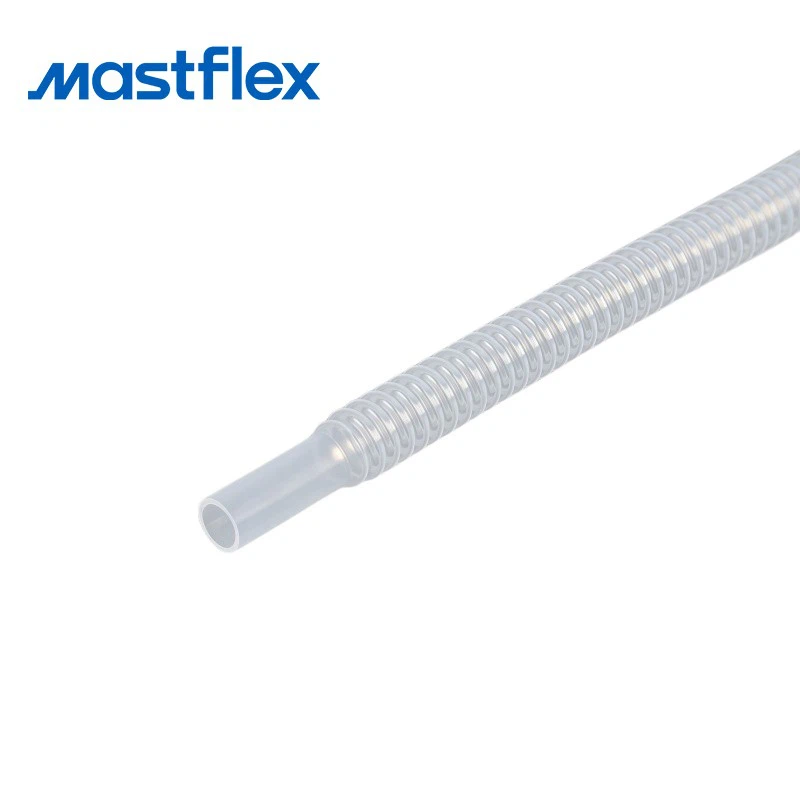
First off, let's talk a bit about FEP tubing. FEP, or fluorinated ethylene propylene, is a type of fluoropolymer. It's known for its excellent chemical resistance, high clarity, and good flexibility. You can find it in a bunch of different applications, from laboratory setups to industrial processes. We offer different types of FEP tubing, like FEP Hose, FEP Lined Tubing, and FEP Corrugated Tubing.
Now, onto the main topic: oxygen permeability. Oxygen permeability refers to how easily oxygen molecules can pass through a material. In the case of FEP tubing, it's an important characteristic, especially when you're dealing with applications where you need to control the amount of oxygen that gets in or out of the tubing.
FEP tubing has relatively low oxygen permeability. This is due to its molecular structure. The fluorine atoms in FEP create a dense and stable molecular arrangement. This acts as a bit of a barrier, making it harder for oxygen molecules to wiggle their way through the tubing wall.
Let's look at some of the factors that can affect the oxygen permeability of FEP tubing.
Temperature
Temperature plays a big role. As the temperature goes up, the oxygen permeability of FEP tubing generally increases. At higher temperatures, the molecules in the FEP have more energy and are moving around more. This creates more space between the molecules, allowing oxygen to pass through more easily. For example, if you're using FEP tubing in a high - temperature industrial process, you might notice that the rate of oxygen transfer through the tubing is higher compared to when it's used at room temperature.
Wall Thickness
The thickness of the FEP tubing wall also matters. A thicker wall means there's more material for the oxygen molecules to pass through. So, thicker FEP tubing will have lower oxygen permeability compared to thinner tubing. If you're in an application where you need to minimize oxygen transfer, choosing a tubing with a thicker wall can be a good idea. For instance, in some medical applications where you need to keep oxygen levels stable inside the tubing, a thicker - walled FEP tubing might be the way to go.
Pressure
The pressure difference across the tubing wall can impact oxygen permeability. A higher pressure difference can force oxygen molecules through the tubing more quickly. If there's a significant pressure inside the tubing compared to the outside, or vice versa, the oxygen will try to equalize the pressure by moving through the tubing wall. So, when you're designing a system with FEP tubing, you need to consider the pressure conditions to understand how much oxygen might be getting in or out.
Why Low Oxygen Permeability is Good
There are several applications where the low oxygen permeability of FEP tubing is a real advantage.
Medical Applications
In medical settings, FEP tubing is used for things like fluid delivery systems. If you're delivering a medication or a nutrient solution that's sensitive to oxygen, you don't want oxygen to seep into the tubing and react with the contents. The low oxygen permeability of FEP tubing helps keep the solution stable and ensures its effectiveness.
Chemical Processing
In chemical processing plants, many chemicals can react with oxygen. Using FEP tubing with low oxygen permeability helps prevent unwanted chemical reactions. For example, if you're handling a chemical that oxidizes easily in the presence of oxygen, FEP tubing can act as a protective barrier, keeping the chemical pure and safe to use.
Food and Beverage Industry
When it comes to food and beverage processing, oxygen can cause spoilage. FEP tubing can be used to transport liquids or gases in the production process. Its low oxygen permeability helps maintain the quality and freshness of the products. Whether it's transporting fruit juices or carbonated beverages, FEP tubing can help keep oxygen out and preserve the taste and quality of the final product.
Measuring Oxygen Permeability
Measuring the oxygen permeability of FEP tubing usually involves specialized equipment. One common method is the oxygen transmission rate (OTR) test. In this test, a sample of the FEP tubing is placed in a chamber. One side of the tubing is exposed to a known concentration of oxygen, and the other side is kept at a different oxygen level or is oxygen - free. Then, the amount of oxygen that passes through the tubing over a certain period of time is measured. This gives you a quantitative value for the oxygen permeability of the tubing.
Comparing FEP Tubing with Other Materials
When you compare FEP tubing with other types of tubing materials, its low oxygen permeability really stands out. For example, compared to some types of plastic tubing made from polyethylene or polypropylene, FEP tubing has much lower oxygen permeability. These other plastics have a less dense molecular structure, which allows oxygen to pass through more easily.
Applications and Oxygen Permeability Requirements
Let's take a closer look at some specific applications and their oxygen permeability requirements.
Gas Sampling
In gas sampling applications, you want to make sure that the gas sample you collect inside the FEP tubing doesn't get contaminated with oxygen from the outside. So, a tubing with very low oxygen permeability is essential. You need to accurately measure the composition of the gas sample, and any oxygen leakage can throw off your results.
Aquarium Systems
In aquarium systems, FEP tubing can be used for water circulation and aeration. While you do want some oxygen in the water, you also don't want too much to seep in through the tubing walls. The low oxygen permeability of FEP tubing helps maintain a stable oxygen level in the water, which is important for the health of the aquatic life in the aquarium.
How We Can Help
As a supplier of FEP tubing, we understand the importance of oxygen permeability in different applications. We can help you choose the right FEP tubing based on your specific oxygen - related requirements. Whether you need a tubing with a specific wall thickness to control oxygen transfer or a tubing that can withstand high temperatures without a significant increase in oxygen permeability, we've got you covered.
If you're interested in learning more about our FEP tubing products or have questions about oxygen permeability and how it relates to your application, don't hesitate to get in touch. We're here to assist you in making the best choice for your project. Reach out to us for a detailed discussion and let's start a conversation about your FEP tubing needs.
References
- ASTM D3985 - Standard Test Method for Oxygen Gas Transmission Rate Through Plastic Film and Sheeting Using a Coulometric Sensor
- Textbooks on polymer science and engineering covering the properties of fluoropolymers
So, there you have it - a rundown on the oxygen permeability of FEP tubing. I hope this gives you a better understanding of why it's an important characteristic and how it can impact your applications. If you're thinking about using FEP tubing, remember to consider these factors related to oxygen permeability to ensure you get the best performance from your tubing.