


Hey there! As a supplier of white silicone tubing, I often get asked about the inner surface smoothness of our products. It might seem like a small detail, but trust me, it makes a huge difference in various applications. So, let's dive right into what the inner surface smoothness of white silicone tubing is all about.
First off, what does "inner surface smoothness" even mean? Well, it refers to how flat and free of bumps, ridges, or irregularities the inside of the tubing is. You can think of it like the difference between a freshly paved highway and a bumpy dirt road. A smooth inner surface in silicone tubing allows for a much more efficient flow of whatever is passing through it, whether it's liquids, gases, or even small particles.
One of the main reasons why inner surface smoothness is so important is in the context of fluid transfer. When you're dealing with liquids, a smooth inner surface reduces friction. This means that the liquid can flow through the tubing more easily, which in turn reduces the amount of energy needed to pump it. For example, in a dairy processing plant, using Silicone Dairy Tubing with a smooth inner surface can help ensure that milk and other dairy products move through the system efficiently, without getting stuck or causing blockages.
Another benefit of a smooth inner surface is that it's easier to clean. In industries where hygiene is crucial, like food and beverage or pharmaceutical manufacturing, any rough spots or crevices in the tubing can become a breeding ground for bacteria and other contaminants. With a smooth inner surface, it's much simpler to flush out any residue and keep the tubing clean and sterile. This not only helps maintain product quality but also extends the lifespan of the tubing.
But how do we measure the inner surface smoothness of white silicone tubing? There are a few different methods, but one of the most common is using a profilometer. This device measures the microscopic peaks and valleys on the surface of the tubing, giving us a numerical value for its roughness. The lower the value, the smoother the surface. At our company, we use state - of - the - art profilometers to ensure that our white silicone tubing meets the highest standards of smoothness.
Now, let's talk about the manufacturing process and how it affects the inner surface smoothness. The way we make our white silicone tubing plays a crucial role in determining its final smoothness. We start with high - quality silicone raw materials. These materials are carefully selected for their purity and consistency, as any impurities can lead to surface irregularities.
During the extrusion process, which is how we shape the tubing, we use precision tools and techniques to ensure a uniform and smooth inner surface. The extrusion die, which is the part of the machine that forms the tubing, is designed to create a seamless and smooth interior. We also closely monitor the temperature and pressure during extrusion, as these factors can have a significant impact on the surface quality.
In addition to the basic manufacturing process, we also offer some specialized treatments to further enhance the inner surface smoothness. For example, we can apply a special coating to the inside of the tubing. This coating not only makes the surface even smoother but also provides additional protection against wear and tear.
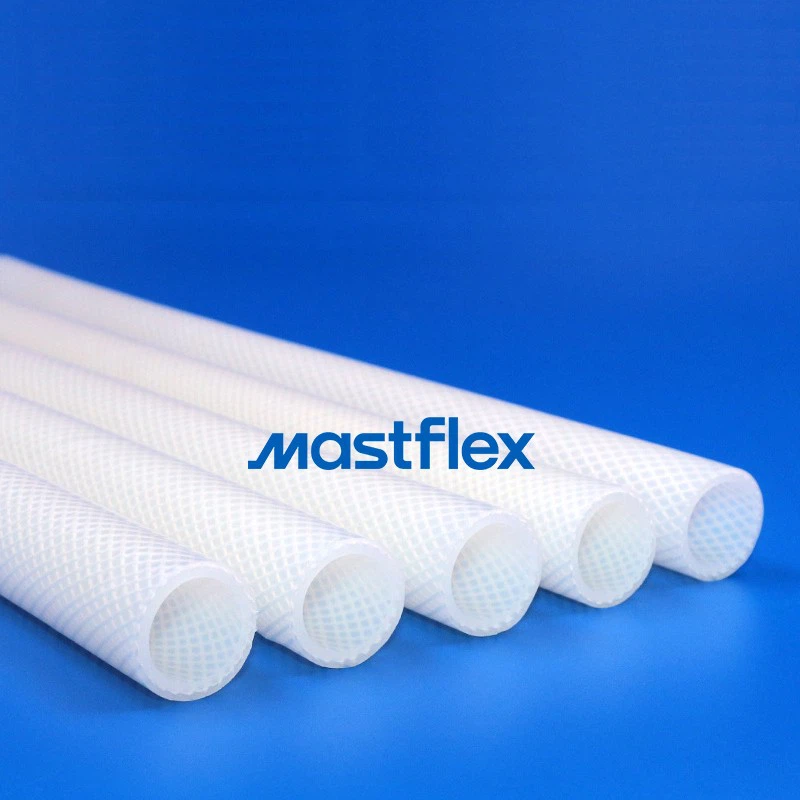
When it comes to different types of white silicone tubing, the inner surface smoothness requirements can vary. For instance, Braid Reinforced Silicone Tubing is often used in applications where higher pressure is involved. While it still needs a smooth inner surface for efficient fluid flow, the braid reinforcement might add a bit of complexity to the manufacturing process. However, we've developed techniques to ensure that even braid - reinforced tubing has a smooth enough inner surface to meet our customers' needs.
On the other hand, Silicone Corrugated Tube has a different design. The corrugations on the outside of the tube give it flexibility, but the inner surface still needs to be smooth. We've found that by carefully controlling the manufacturing process, we can create corrugated tubes with a smooth inner surface that doesn't compromise on the tube's overall performance.

In real - world applications, the inner surface smoothness of white silicone tubing can make a big difference in the success of a project. Take the medical industry, for example. In medical devices, such as IV lines or catheters, a smooth inner surface is essential. It ensures that medications and fluids can be delivered to the patient accurately and without any blockages. Any rough spots in the tubing could cause the medication to clump or the fluid to flow unevenly, which could have serious consequences for the patient.
In the automotive industry, white silicone tubing is often used for coolant and air intake systems. A smooth inner surface in these applications helps maintain the proper flow of fluids and gases, which is crucial for the engine's performance. If the tubing has a rough inner surface, it could lead to reduced efficiency, increased wear on the engine components, and even potential breakdowns.
So, if you're in the market for white silicone tubing, don't overlook the importance of inner surface smoothness. It can have a significant impact on the performance, efficiency, and longevity of your tubing. Whether you're in the food and beverage industry, pharmaceuticals, automotive, or any other field that uses silicone tubing, our high - quality white silicone tubing with a smooth inner surface is the way to go.
If you're interested in learning more about our white silicone tubing or have specific requirements for your project, we'd love to hear from you. Just reach out to us, and we can discuss your needs in detail and find the perfect tubing solution for you.
References
- ASTM International standards on surface roughness measurement
- Industry research papers on fluid flow in silicone tubing
- Manufacturer's guidelines on cleaning and maintenance of silicone tubing


