


Hey there! As a supplier of White Silicone Tubing, I often get asked about the chemical stability of this product. So, I thought I'd take a moment to break it down for you.
First off, let's talk about what chemical stability means. In simple terms, it's how well a material can resist chemical reactions when it comes into contact with different substances. This is super important, especially when the tubing is used in various industries where it might encounter different chemicals.
White Silicone Tubing is known for its excellent chemical stability. Silicone, as a material, has a unique molecular structure. It consists of a silicon - oxygen backbone with organic side groups. This structure gives it some pretty amazing properties.
One of the great things about white silicone tubing is its resistance to a wide range of chemicals. It can handle many acids and bases to a certain extent. For example, it can withstand mild acids like acetic acid, which is commonly found in vinegar. In a laboratory setting, if you're using white silicone tubing to transfer a solution with a low - concentration acid, you can be pretty confident that the tubing won't degrade quickly.
When it comes to bases, it can also tolerate mild alkaline solutions. This makes it suitable for applications in industries such as food and beverage, where cleaning agents with a slightly alkaline pH might be used to sanitize the tubing.
However, it's important to note that not all chemicals are friendly to white silicone tubing. Strong acids and bases can cause problems. Concentrated sulfuric acid or sodium hydroxide, for instance, can react with the silicone and break down its structure over time. The silicone might start to swell, become brittle, or lose its flexibility. So, if you're dealing with these types of harsh chemicals, you'll need to be extra cautious or consider using a different type of tubing.
Organic solvents are another area to watch out for. Some solvents like toluene and xylene can have a negative impact on white silicone tubing. These solvents can dissolve the silicone or cause it to swell. This is crucial in industries like pharmaceuticals, where organic solvents are often used in the manufacturing process. If you're using white silicone tubing in such an environment, you need to make sure that the solvents it comes into contact with are compatible.
Now, let's talk about the temperature factor. Chemical stability can also be affected by temperature. At higher temperatures, the chemical reactions between the tubing and the chemicals it encounters can speed up. For example, if you're using white silicone tubing in a hot environment and it's in contact with a chemical that it can react with, the degradation process will be faster compared to a cooler environment.
But the good news is that white silicone tubing generally has a good temperature range. It can operate from relatively low temperatures, around - 60°C, up to high temperatures of about 200°C or even higher in some cases. This wide temperature range makes it suitable for many different applications, from cryogenic processes to high - temperature manufacturing.
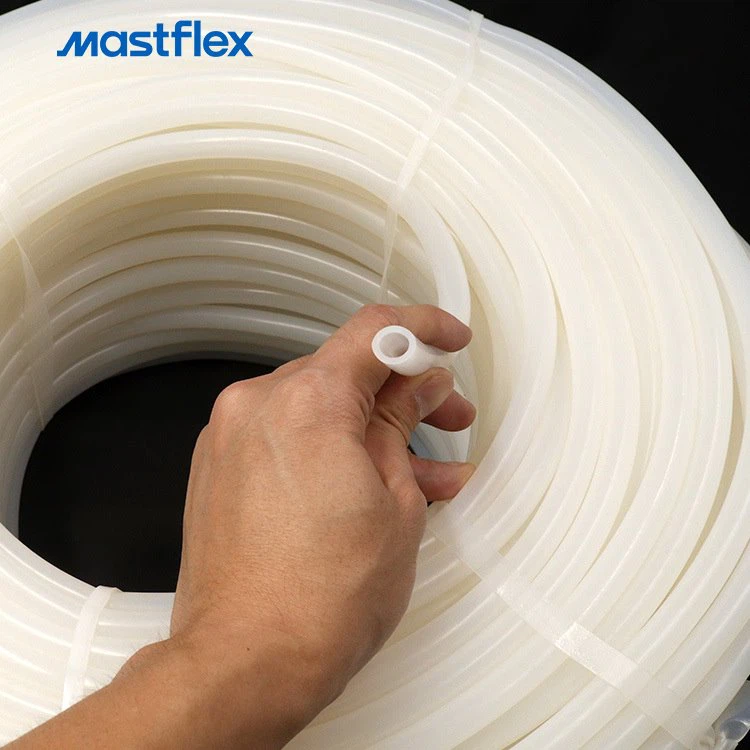

In the food and beverage industry, white silicone tubing's chemical stability is a huge advantage. It's non - toxic and can be in contact with food products without leaching harmful substances. This is because it has a high resistance to the chemicals found in food, such as sugars, salts, and acids. It also meets many food - grade standards, which means it's safe for use in processes like milk transfer, juice bottling, and beer brewing.
In the medical field, white silicone tubing is also popular due to its chemical stability. It can be used in medical devices to transfer fluids. Since it doesn't react easily with body fluids or medications, it reduces the risk of contamination and ensures the safety of patients.
If you're looking for a more robust option, we also offer Braid Reinforced Silicone Tubing and Reinforced Silicone Tubing. These types of tubing have additional reinforcement, which can enhance their chemical stability and mechanical strength. They're great for applications where the tubing might be under more stress or where it needs to withstand more aggressive chemicals.
So, if you're in the market for high - quality White Silicone Tubing, we've got you covered. Whether you're in the food industry, pharmaceuticals, or any other sector that requires reliable tubing, our white silicone tubing offers excellent chemical stability and performance.
If you're interested in learning more about our products or have specific requirements for your application, don't hesitate to reach out. We're here to help you find the perfect tubing solution for your needs. Let's start a conversation and see how we can work together to meet your tubing requirements.
References
- "Silicone Elastomers: Chemistry and Technology" by Neil S. Allen
- "Handbook of Plastics, Elastomers, and Composites" by Charles A. Harper


