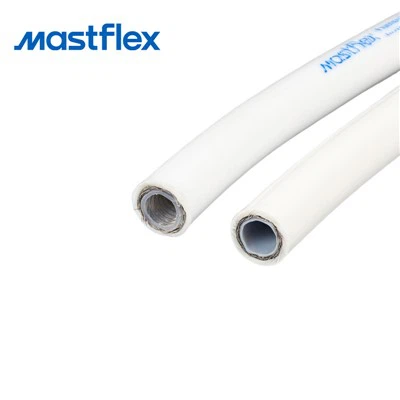
As a leading supplier of sterile silicone tubing, I often encounter questions from customers regarding the product's performance under various conditions. One of the most common inquiries is about the resistance of sterile silicone tubing to UV radiation. In this blog post, I will delve into this topic, exploring the science behind silicone's interaction with UV light and how it affects the performance and longevity of our tubing.
Understanding UV Radiation and Its Effects
UV radiation is a form of electromagnetic radiation emitted by the sun and artificial sources such as UV lamps. It is divided into three main types: UVA (320 - 400 nm), UVB (280 - 320 nm), and UVC (100 - 280 nm). UVC is mostly absorbed by the Earth's atmosphere, but UVA and UVB can reach the surface and cause damage to various materials, including polymers like silicone.
When silicone tubing is exposed to UV radiation, several chemical and physical changes can occur. UV light can break the chemical bonds in the silicone polymer, leading to a process called photodegradation. This can result in a loss of mechanical properties such as flexibility, strength, and elasticity. Over time, the tubing may become brittle, crack, or develop a yellowish discoloration.
The Resistance of Sterile Silicone Tubing to UV Radiation
Silicone is generally known for its good resistance to UV radiation compared to many other polymers. This is due to its unique chemical structure. Silicone polymers consist of a backbone of silicon and oxygen atoms, with organic side groups attached. The silicon - oxygen bonds are relatively strong and stable, which provides some degree of protection against the energy of UV photons.
However, the resistance of silicone tubing to UV radiation is not absolute. The degree of resistance can vary depending on several factors, including the specific formulation of the silicone, the thickness of the tubing, and the intensity and duration of UV exposure.
Formulation of Silicone
Different silicone formulations can have different levels of UV resistance. Some silicone compounds are formulated with additives such as UV stabilizers or antioxidants to enhance their resistance to UV radiation. These additives can absorb or dissipate the energy of UV photons, preventing them from breaking the chemical bonds in the silicone polymer.
Thickness of the Tubing
Thicker silicone tubing generally has better UV resistance than thinner tubing. This is because the additional material provides more protection against the penetration of UV light. The outer layers of the tubing can absorb and scatter the UV radiation, reducing the amount of energy that reaches the inner layers.
Intensity and Duration of UV Exposure
The longer and more intense the UV exposure, the greater the potential for damage to the silicone tubing. In outdoor applications where the tubing is exposed to direct sunlight for extended periods, the risk of photodegradation is higher. In contrast, indoor applications with minimal UV exposure may not pose as significant a threat to the tubing's integrity.
Applications and Considerations
Our sterile silicone tubing is used in a wide range of applications, including medical, pharmaceutical, and bioprocessing industries. In these applications, the resistance to UV radiation can be an important factor.
Medical Applications
In medical settings, silicone tubing is often used for applications such as Silicone Oxygen Tubing, which delivers oxygen to patients. While most medical applications are indoors and have limited UV exposure, there may be situations where the tubing is exposed to UV light, such as during sterilization processes or in some outdoor medical emergencies. In these cases, it is important to ensure that the tubing maintains its integrity and performance.
Bioprocessing Applications
In bioprocessing, Bioprocess Tubing is used for the transfer of fluids, such as cell culture media and buffers. Bioprocessing facilities may have some exposure to UV light, either from natural light sources or from UV lamps used for disinfection. The resistance of the tubing to UV radiation is crucial to prevent any degradation that could affect the quality of the bioprocess.
Clear Silicone Tubing
Clear Silicone Tubing is often preferred in applications where visibility of the fluid inside the tubing is important. However, clear silicone may be more susceptible to UV damage compared to opaque or pigmented silicone. This is because clear silicone allows more UV light to penetrate, increasing the risk of photodegradation.


Testing and Quality Assurance
At our company, we conduct rigorous testing to ensure the quality and performance of our sterile silicone tubing, including its resistance to UV radiation. We use standardized testing methods to simulate UV exposure and evaluate the changes in the tubing's properties over time.
One common test method is the accelerated weathering test, which exposes the tubing to high - intensity UV light for a specified period. This test can provide valuable information about the long - term performance of the tubing under UV exposure. We also monitor the tubing's mechanical properties, such as tensile strength and elongation, before and after the UV exposure to assess any changes.
Conclusion
In conclusion, sterile silicone tubing generally has good resistance to UV radiation, but its performance can be affected by various factors. By understanding these factors and choosing the appropriate silicone formulation and tubing thickness, we can ensure that our tubing meets the requirements of different applications.
If you are in need of sterile silicone tubing for your specific application, we encourage you to contact us for more information. Our team of experts can help you select the right tubing based on your UV exposure requirements and other performance criteria. We are committed to providing high - quality products and excellent customer service.
References
- ASTM International. (Year). Standard test methods for evaluating the resistance of plastics to environmental stress cracking.
- Silicone Elastomers: Chemistry and Technology. (Year). Edited by a group of experts in the field.
- Journal of Polymer Science: Part B: Polymer Physics. (Year). Articles on the photodegradation of silicone polymers.